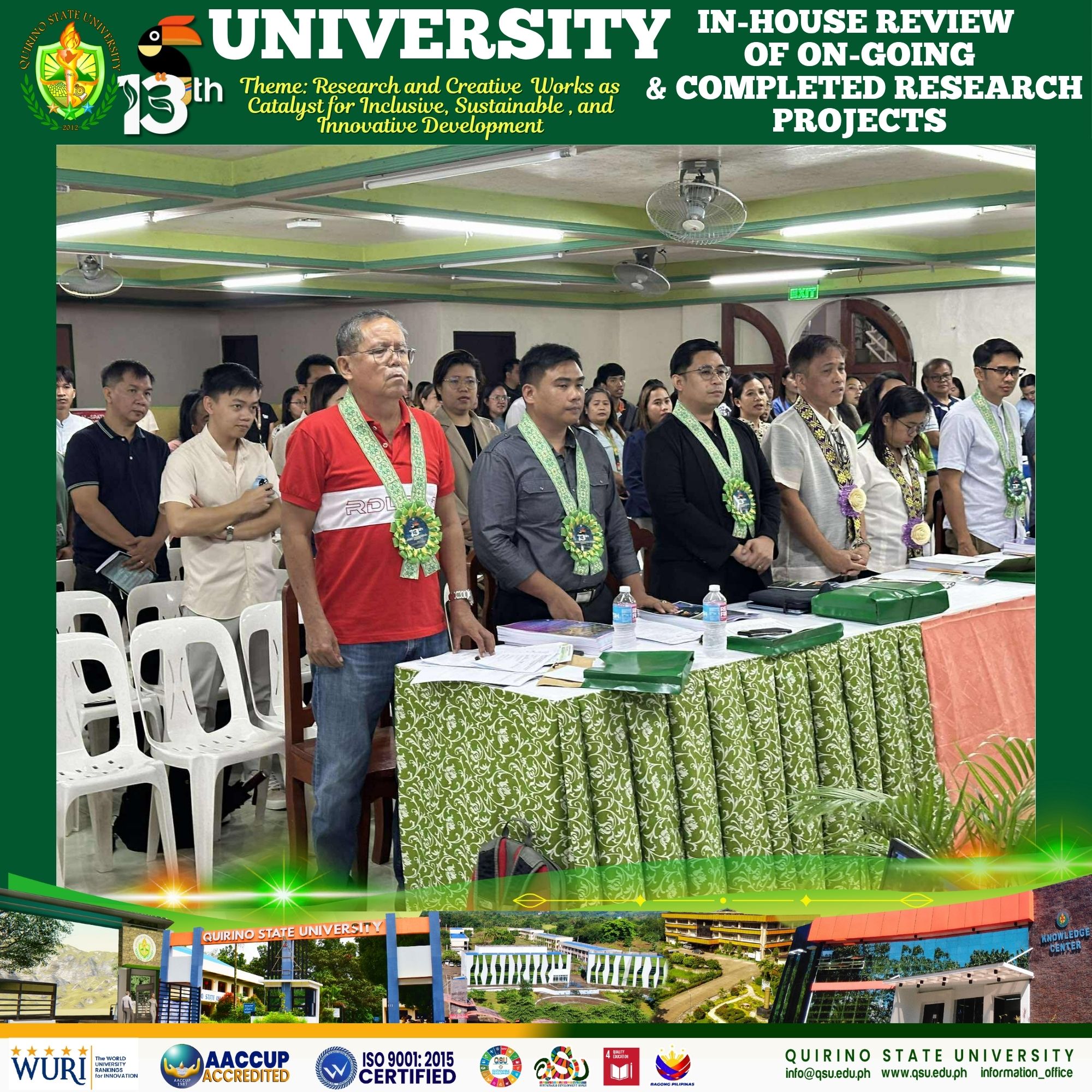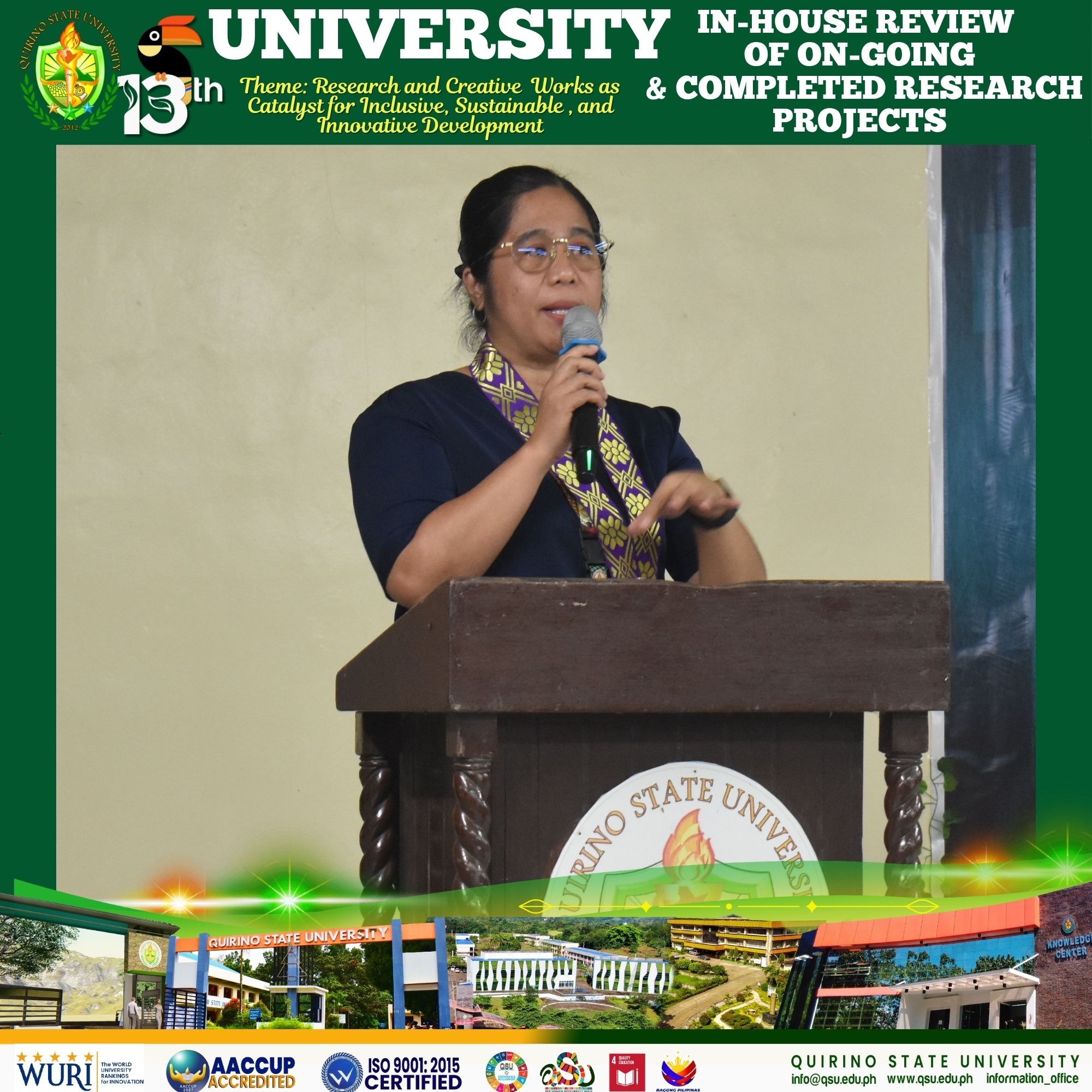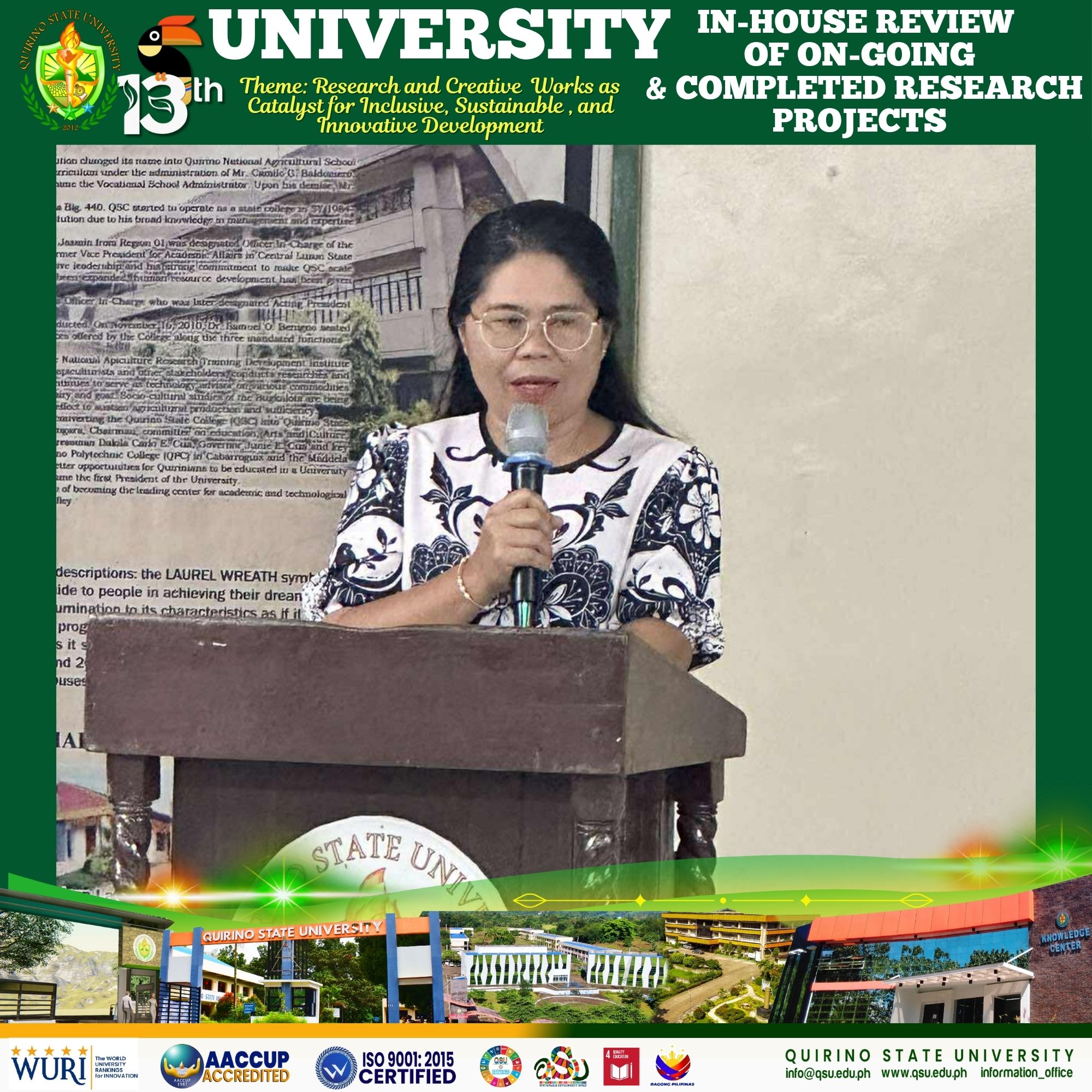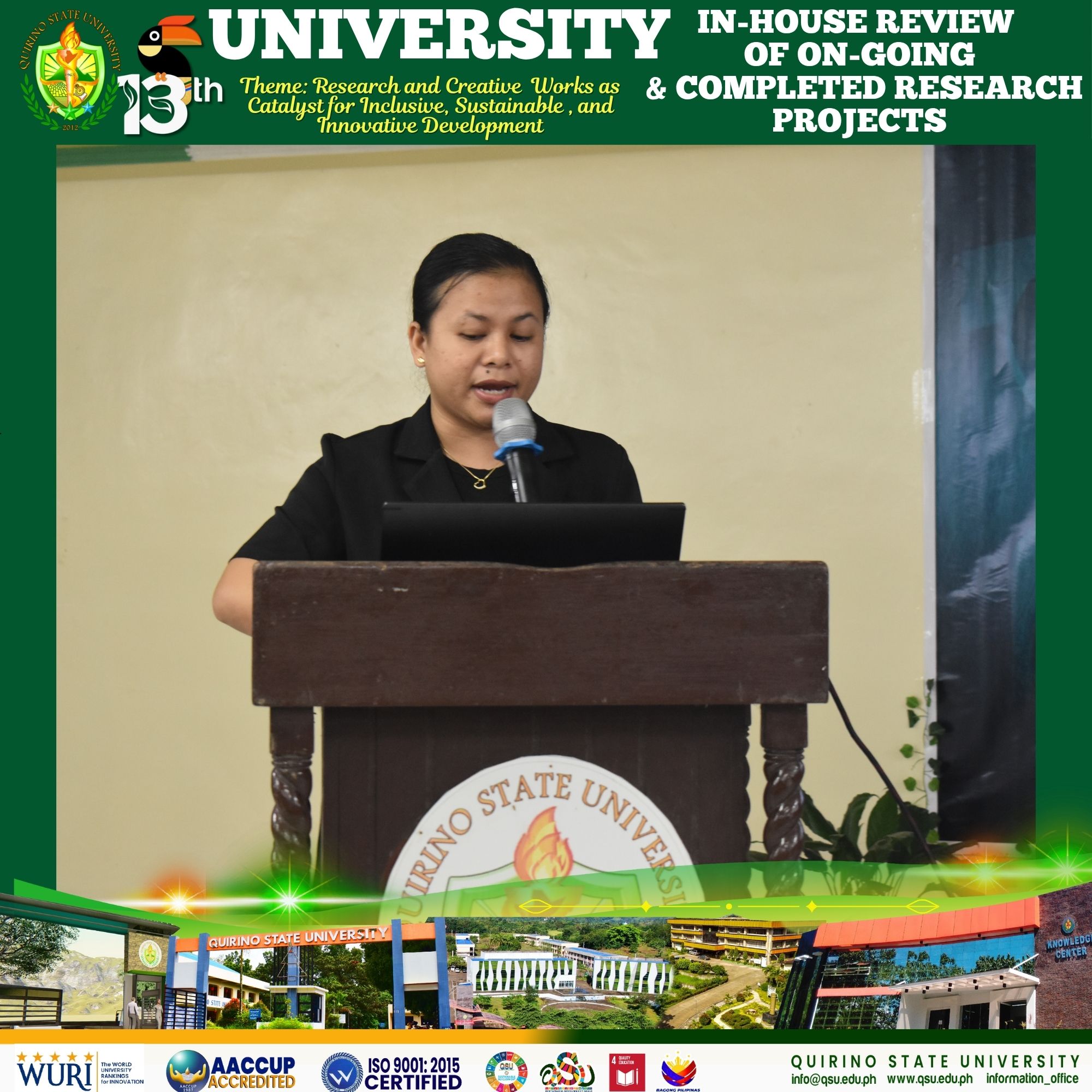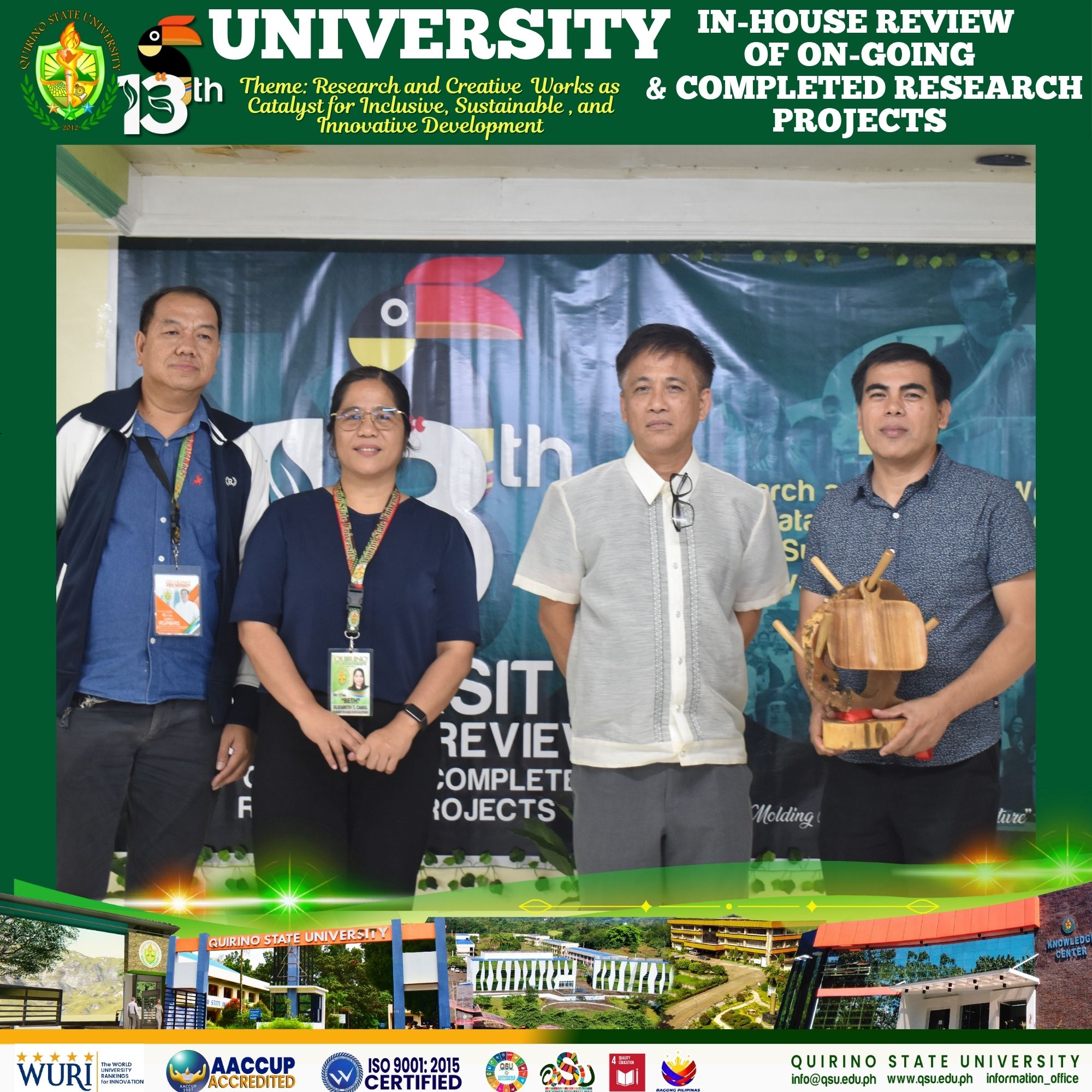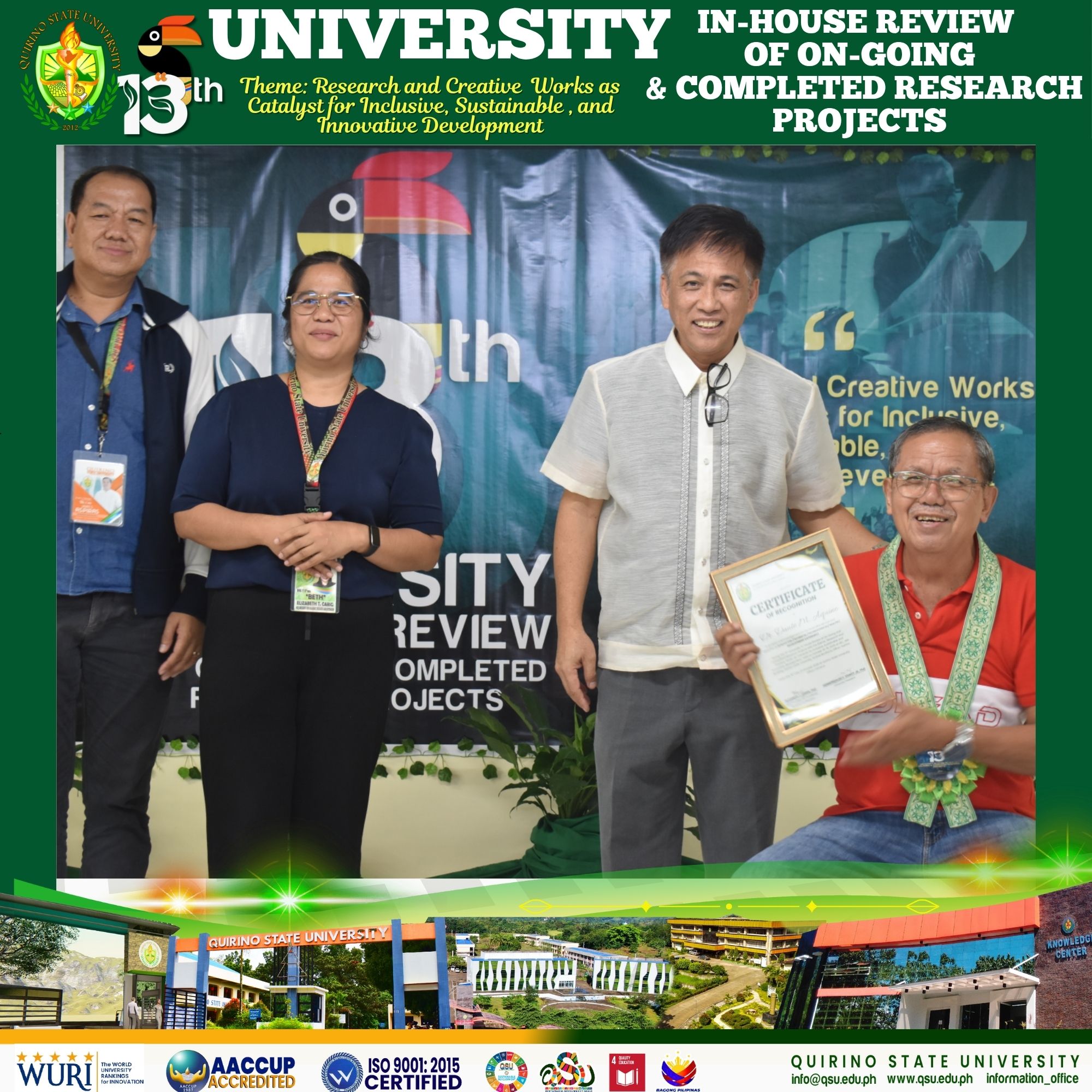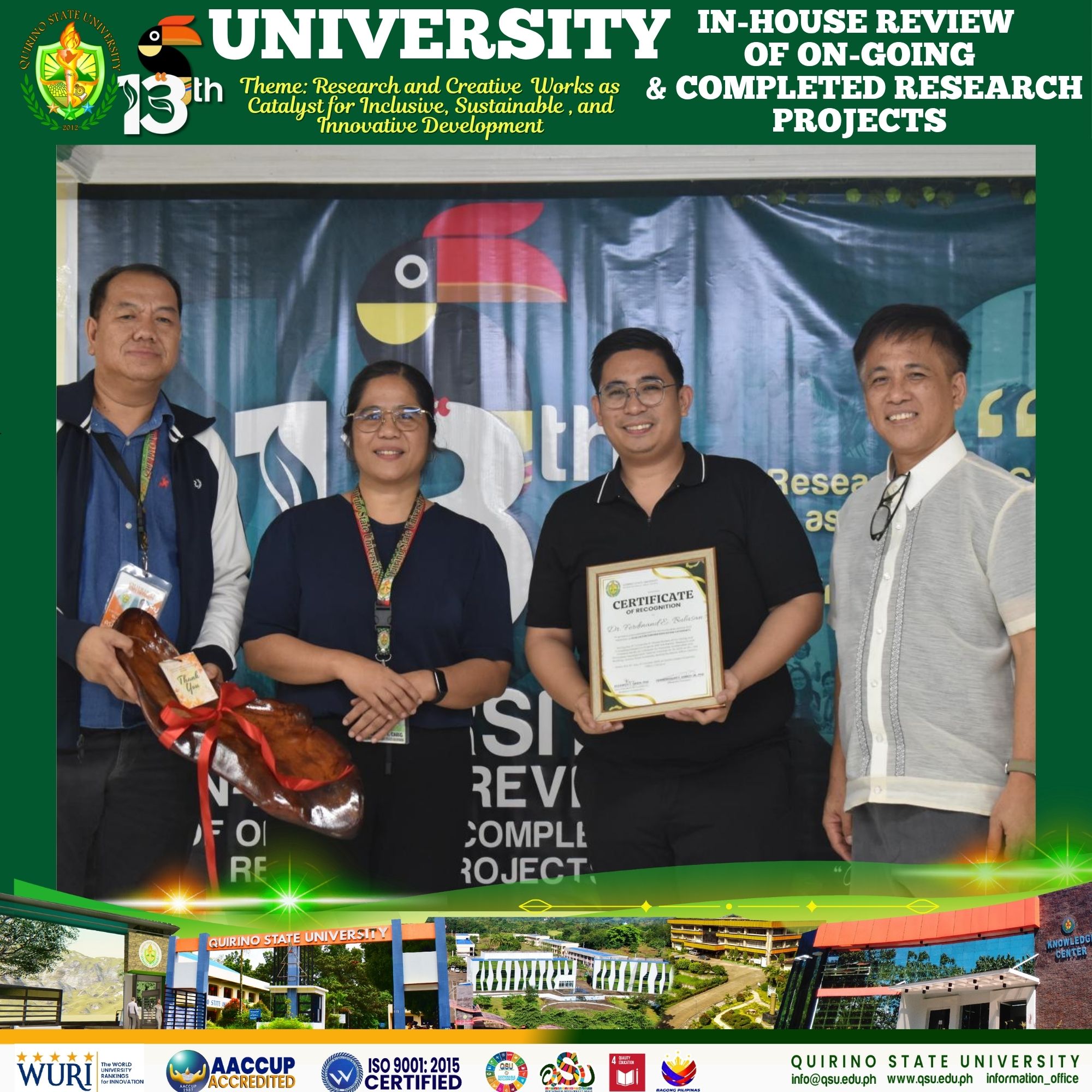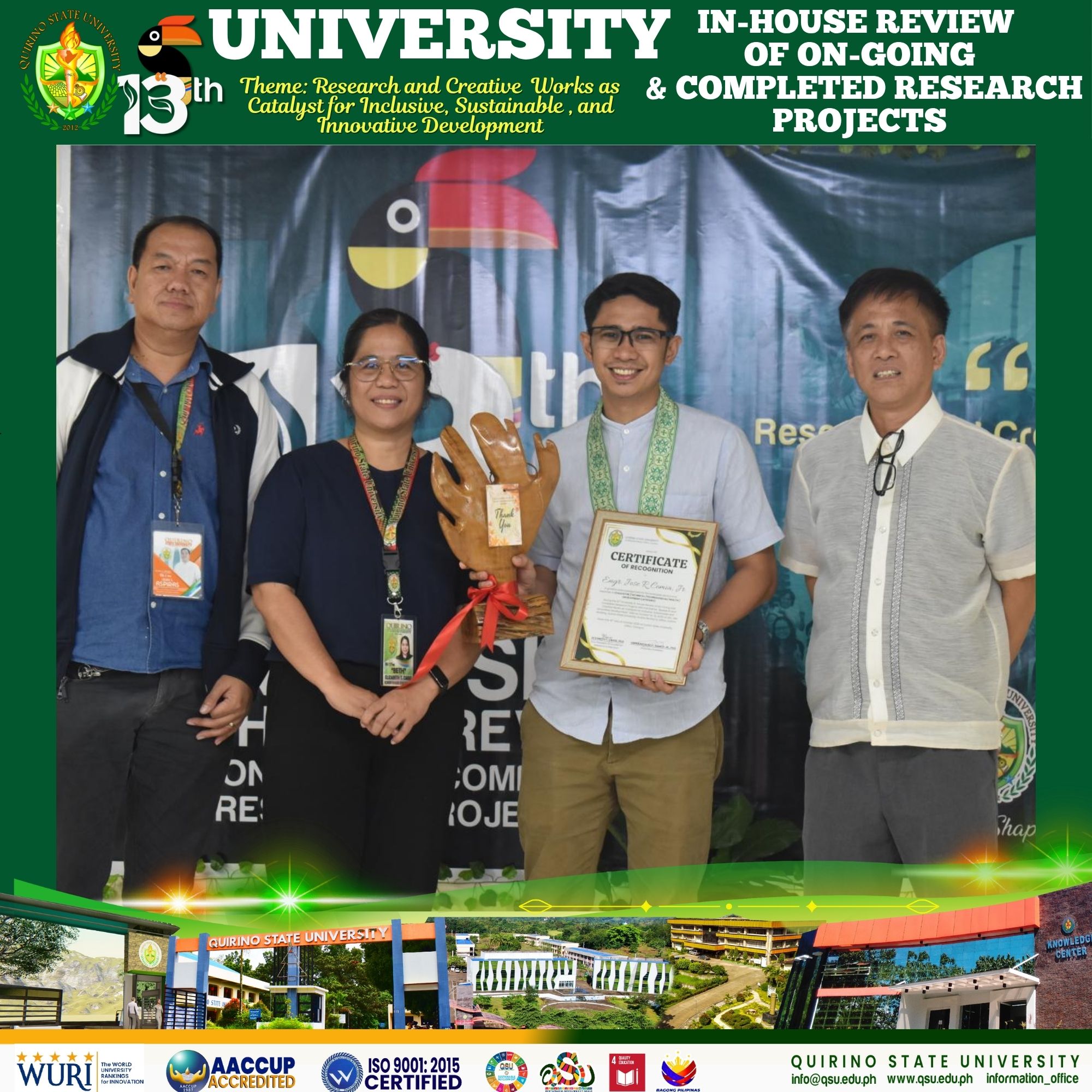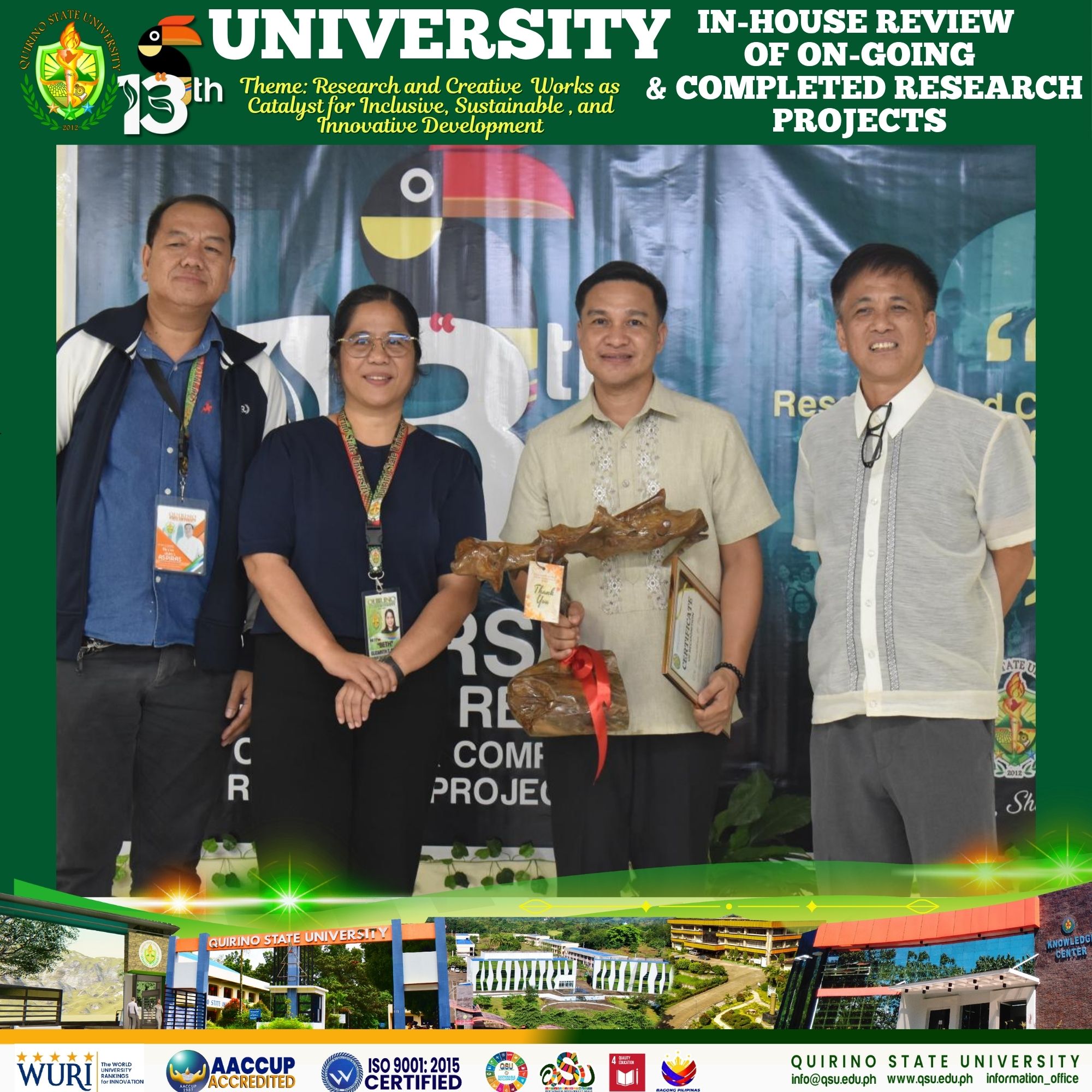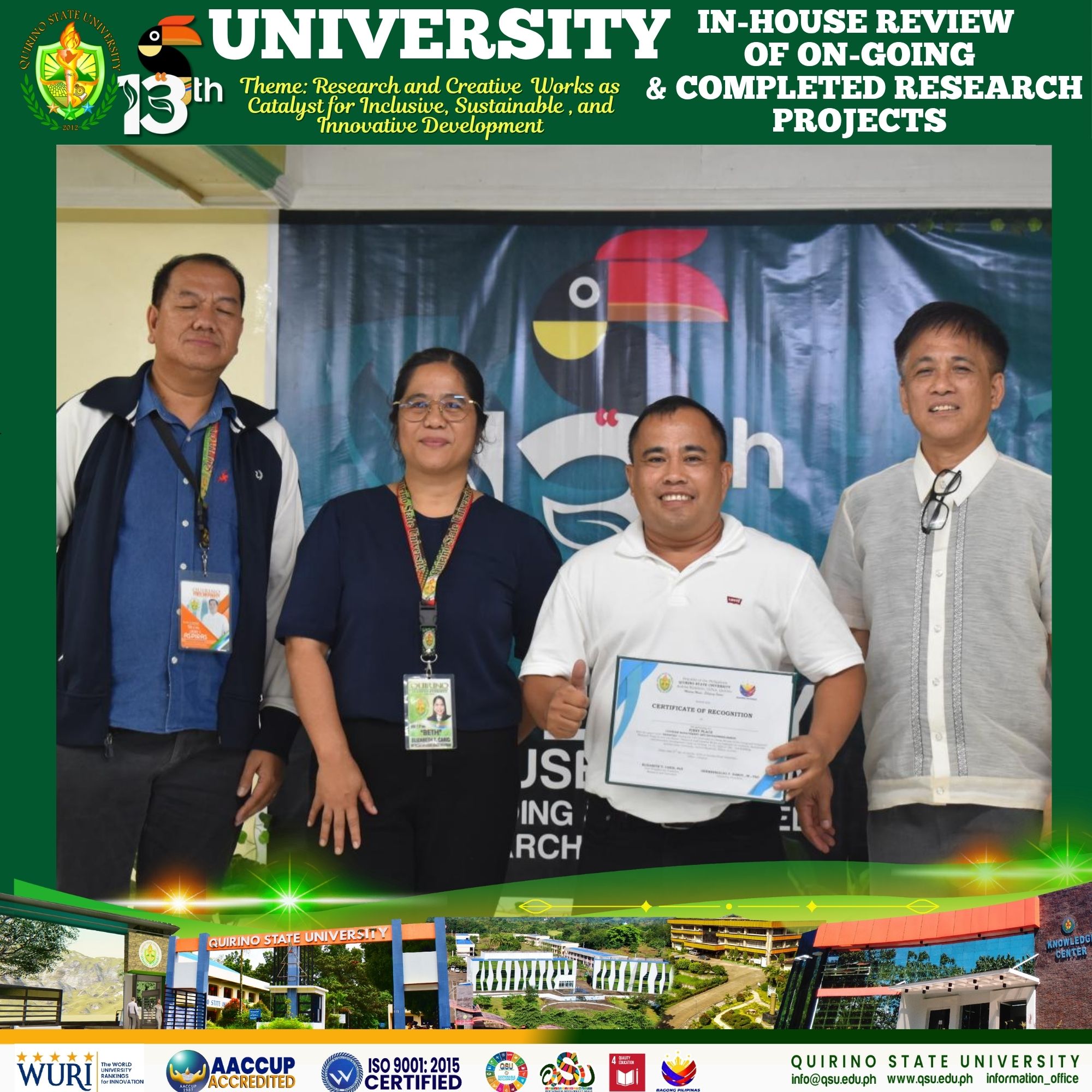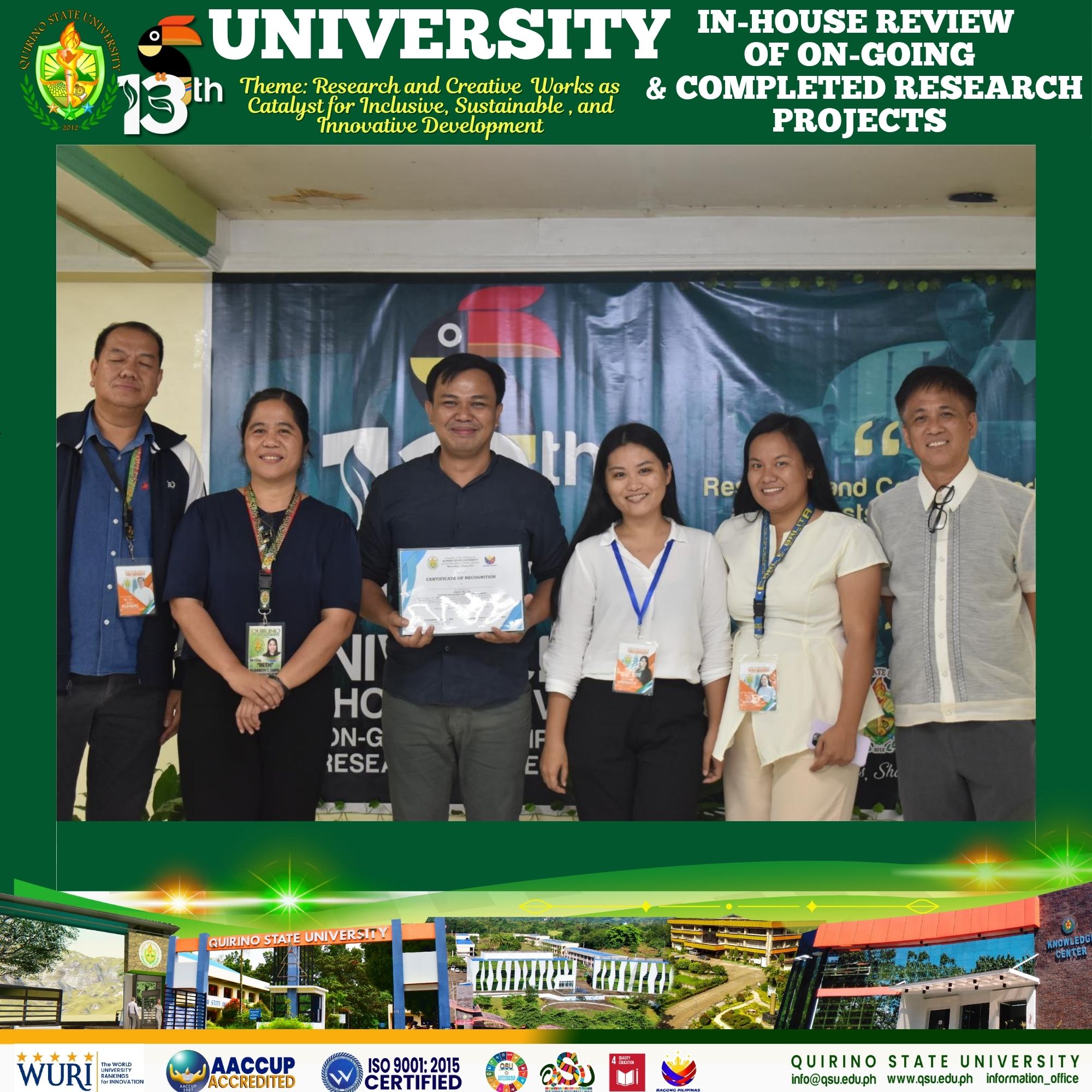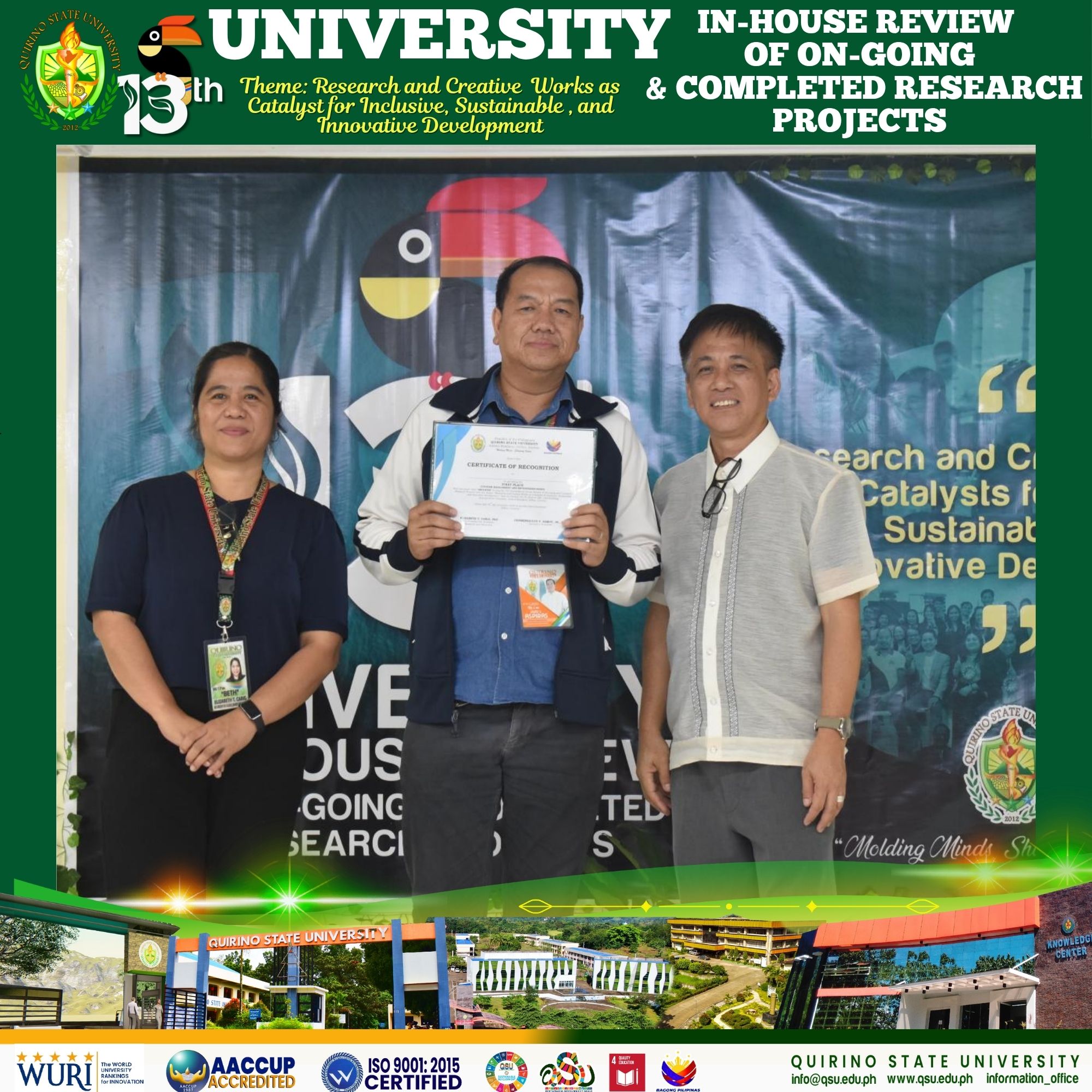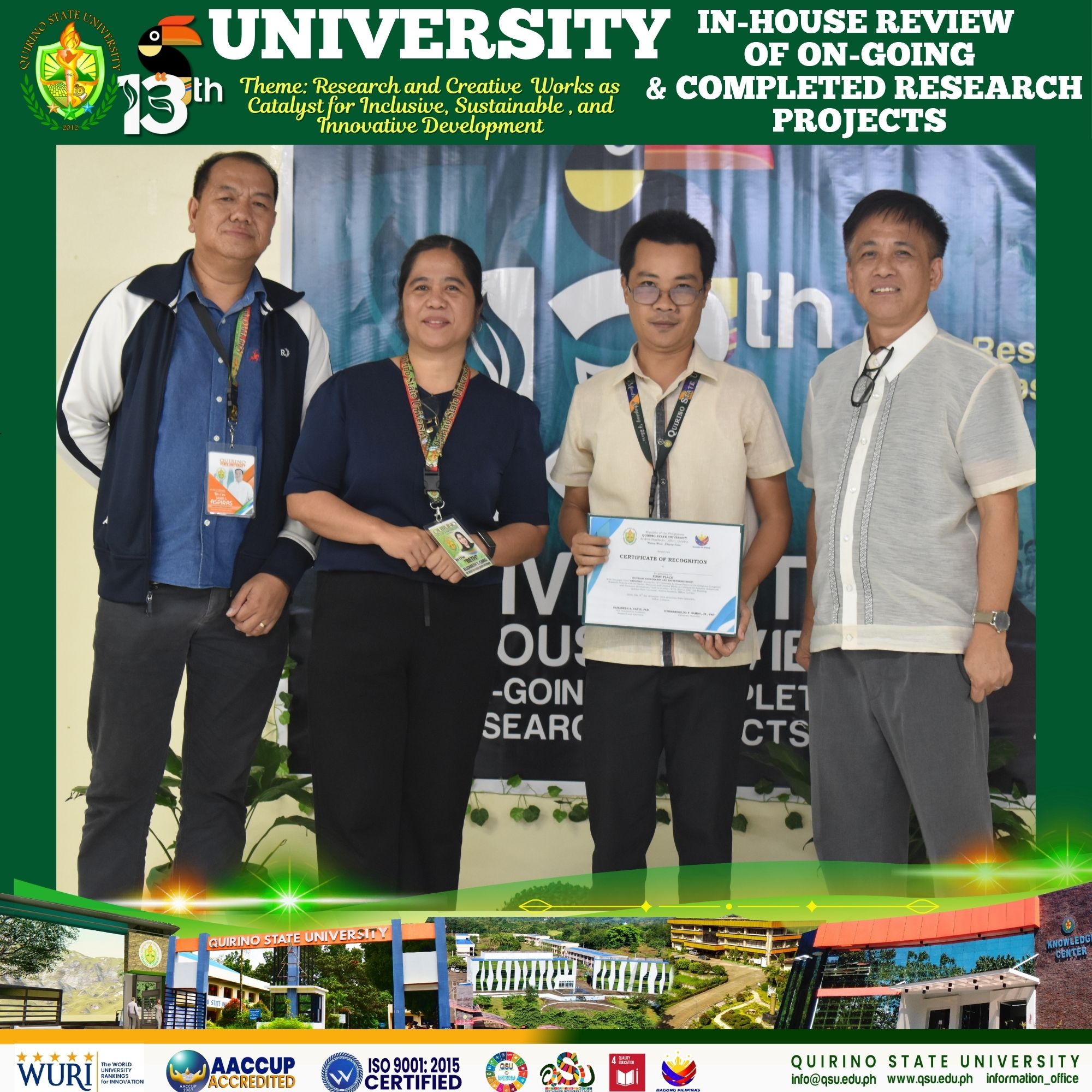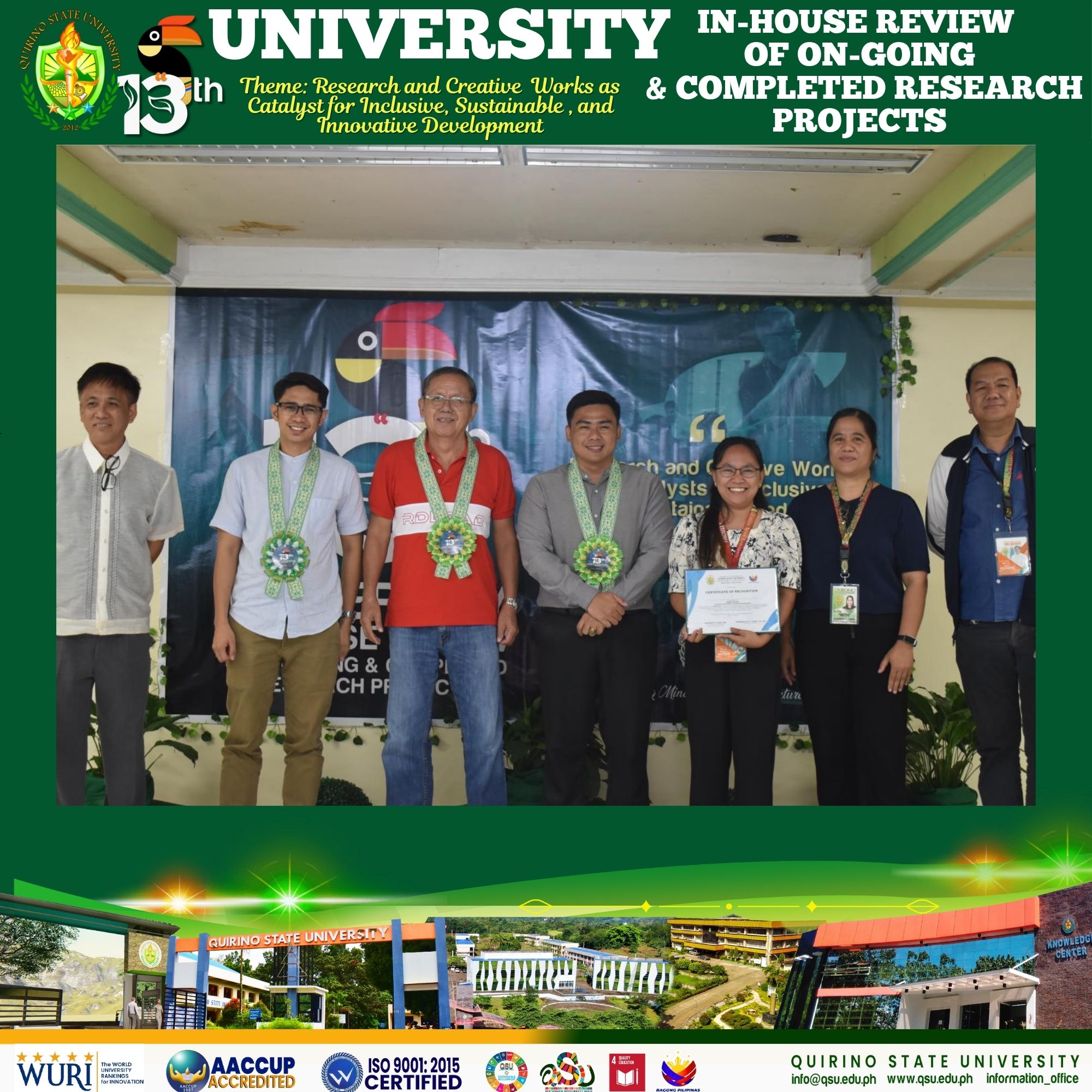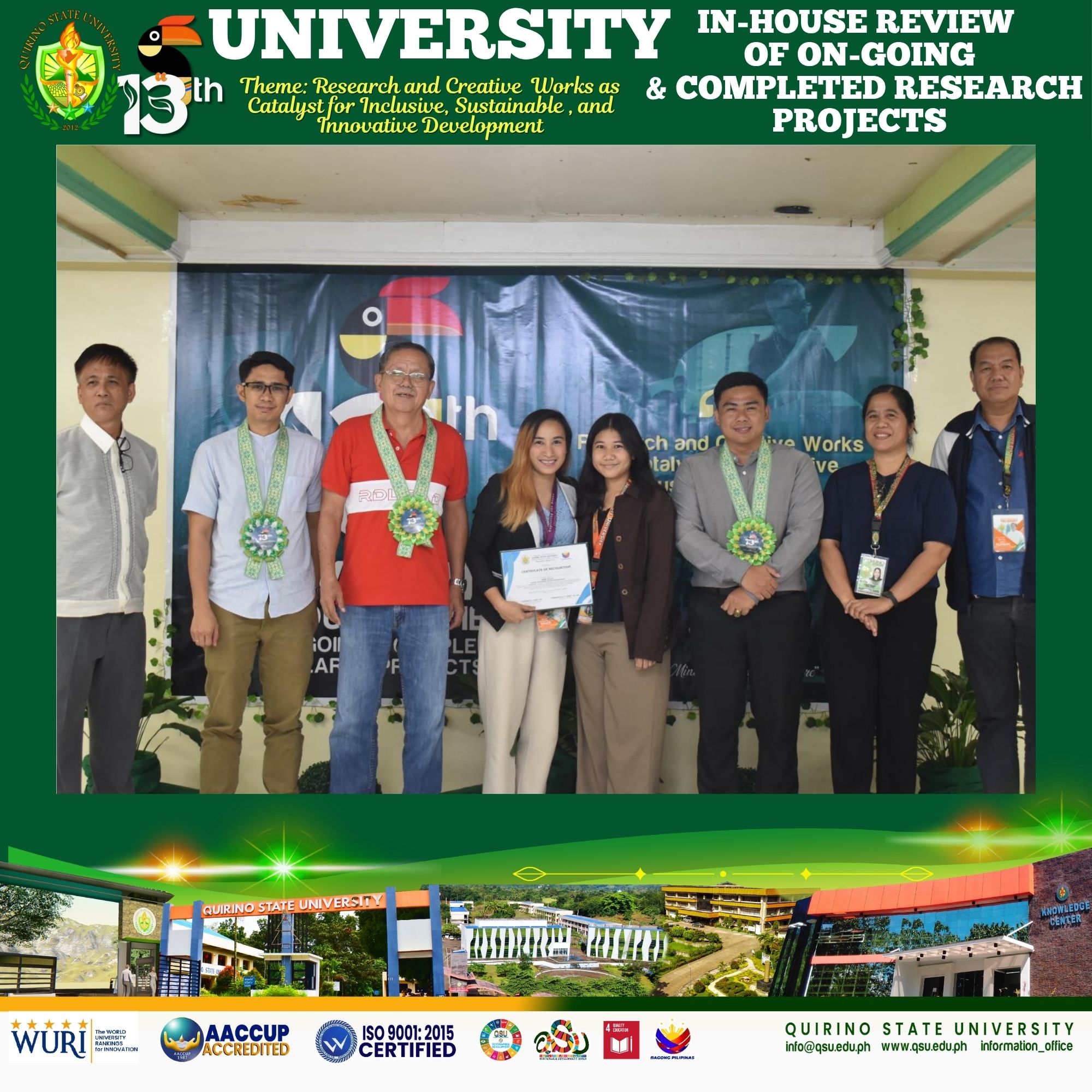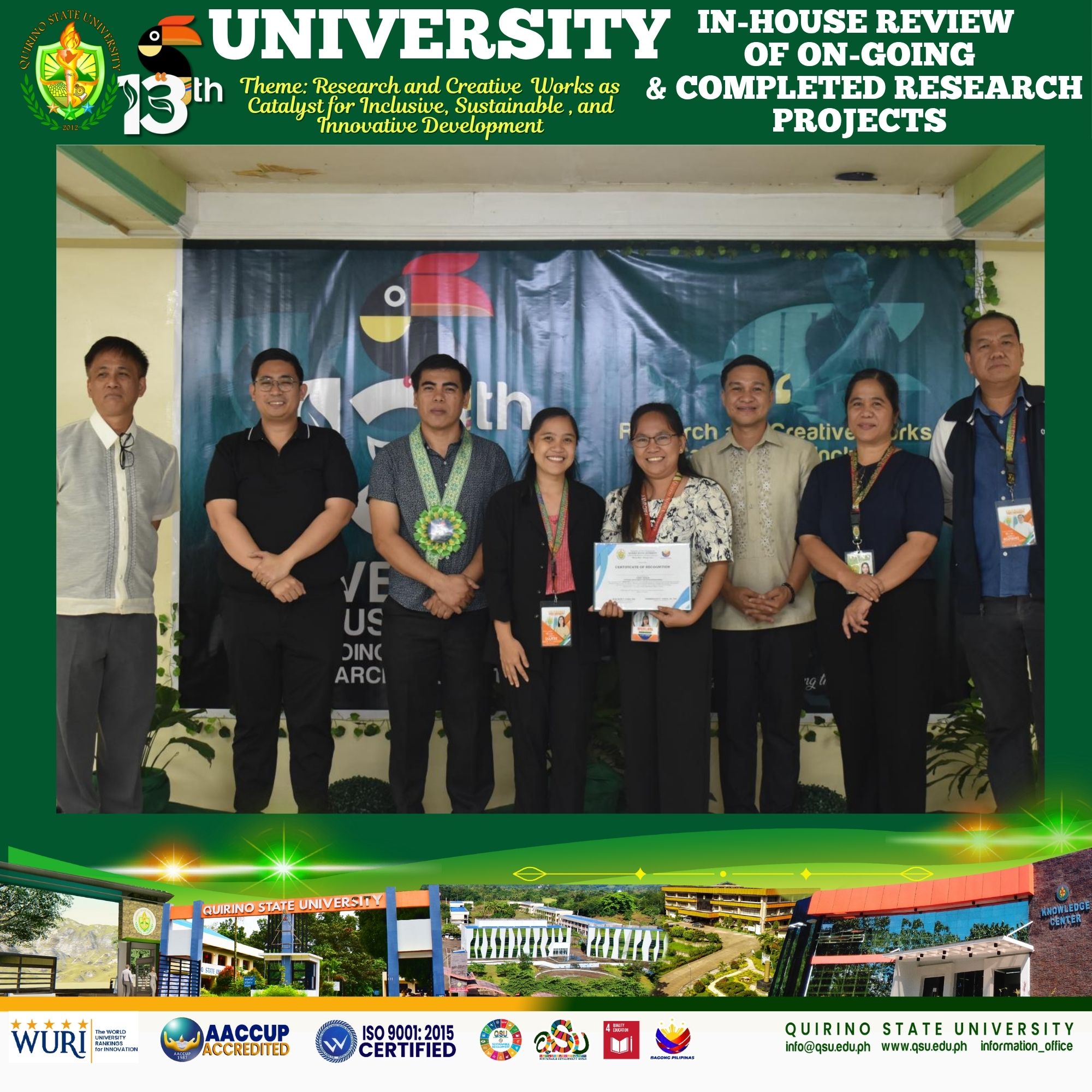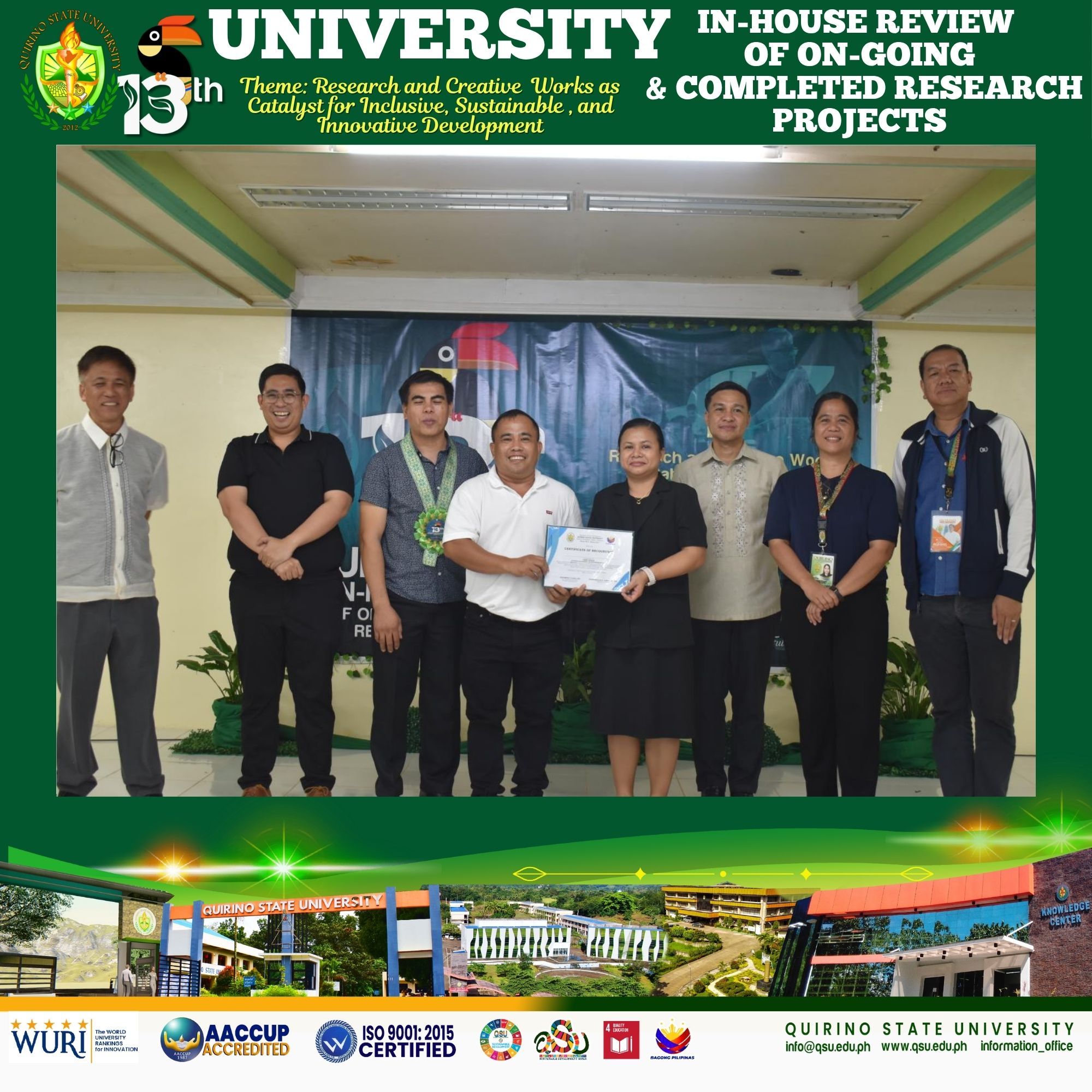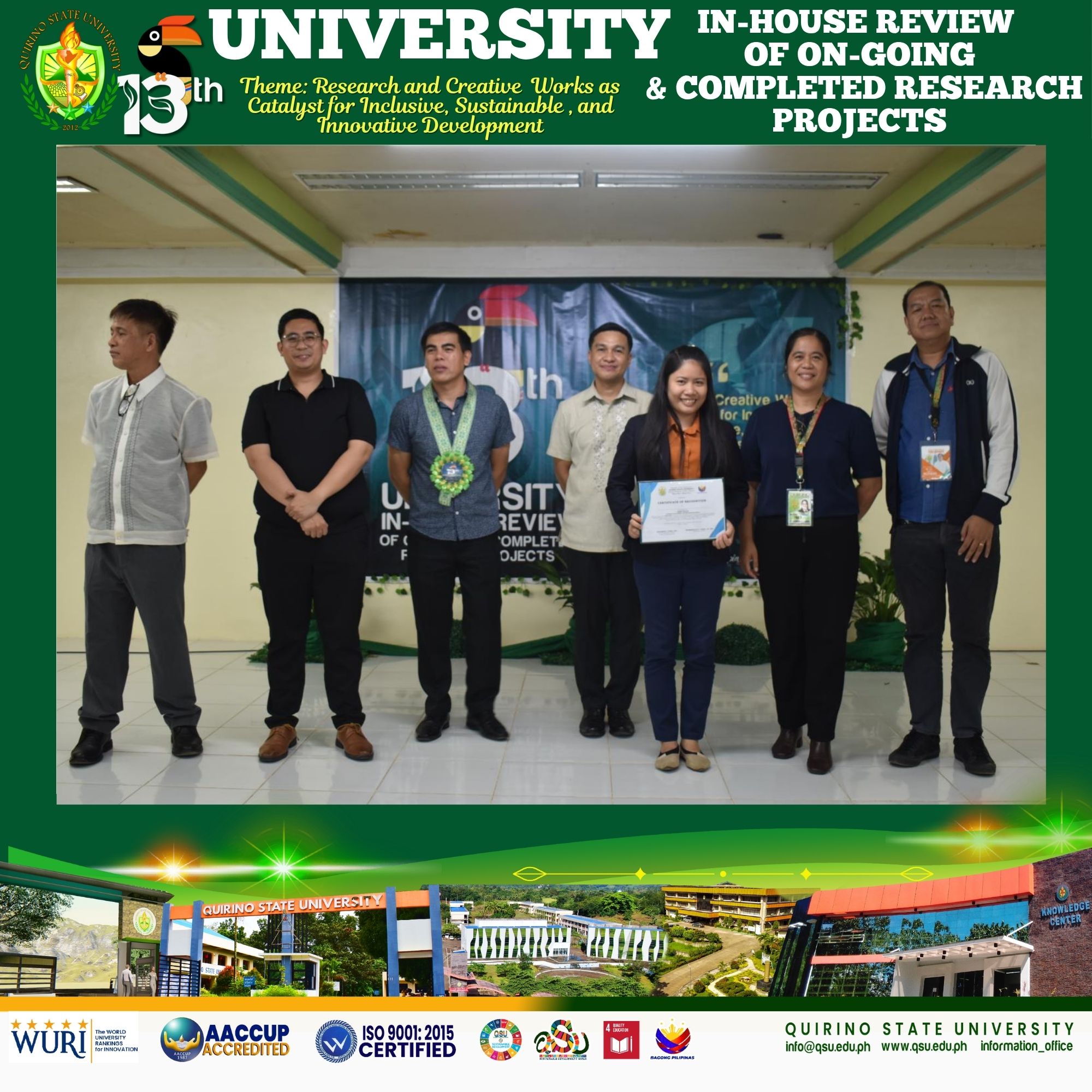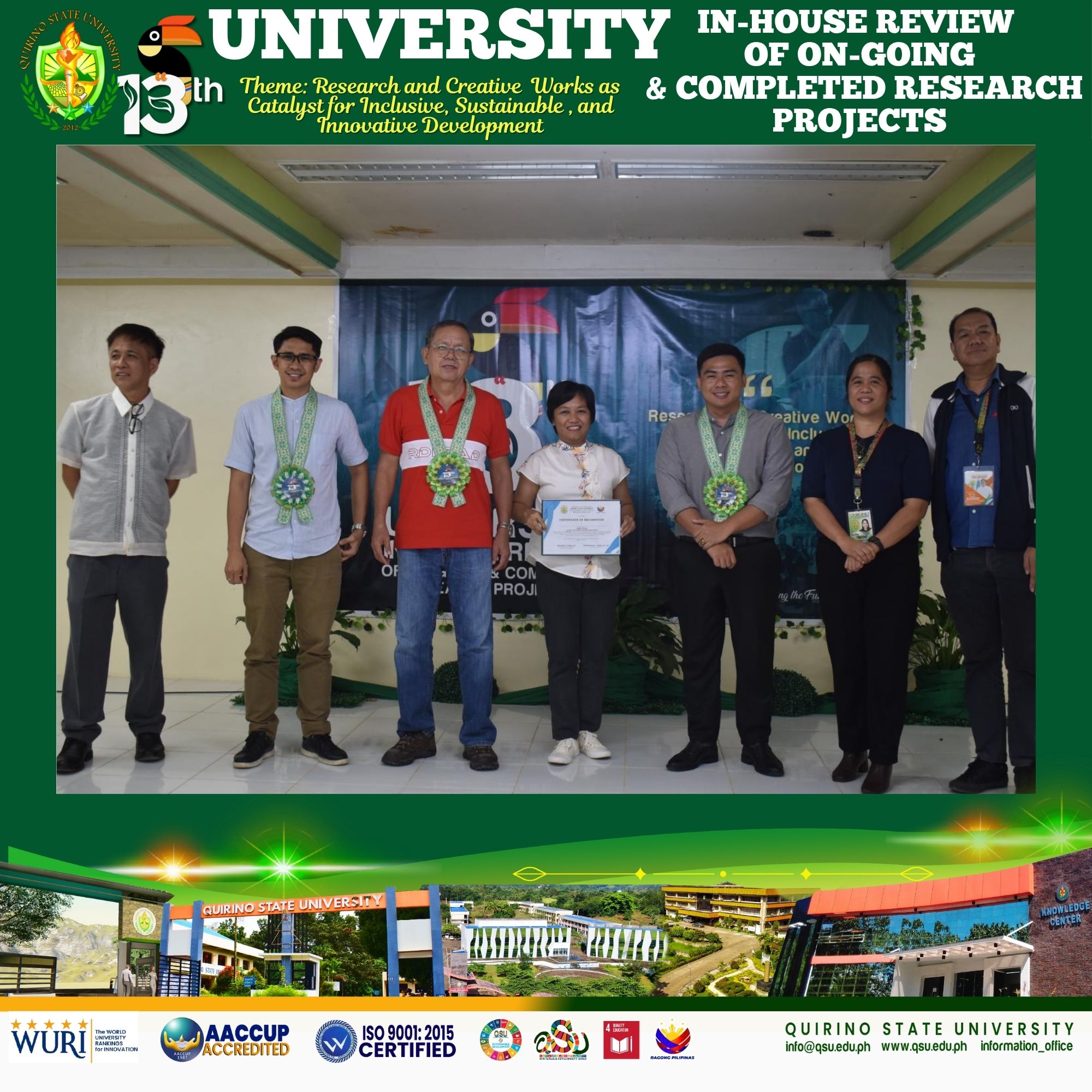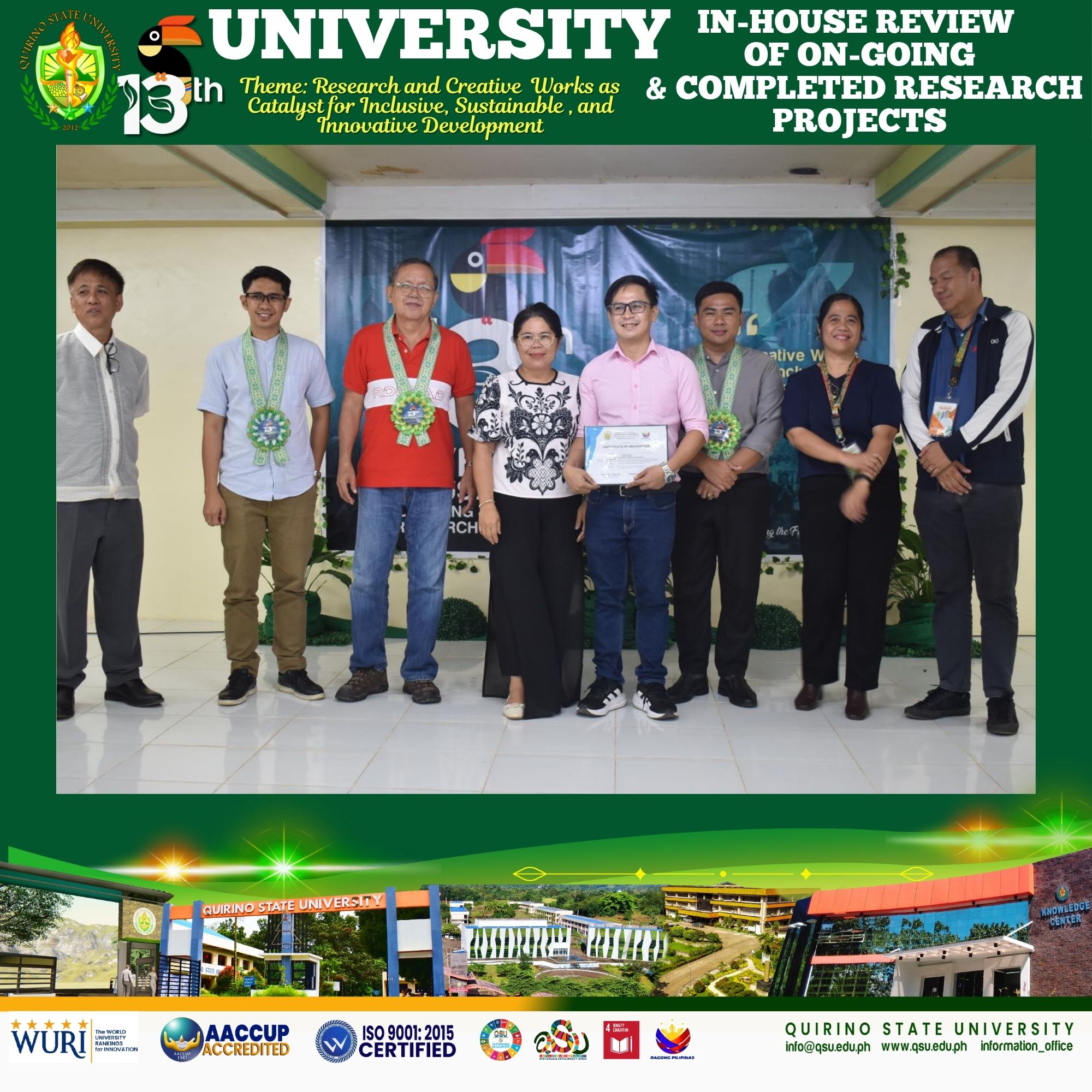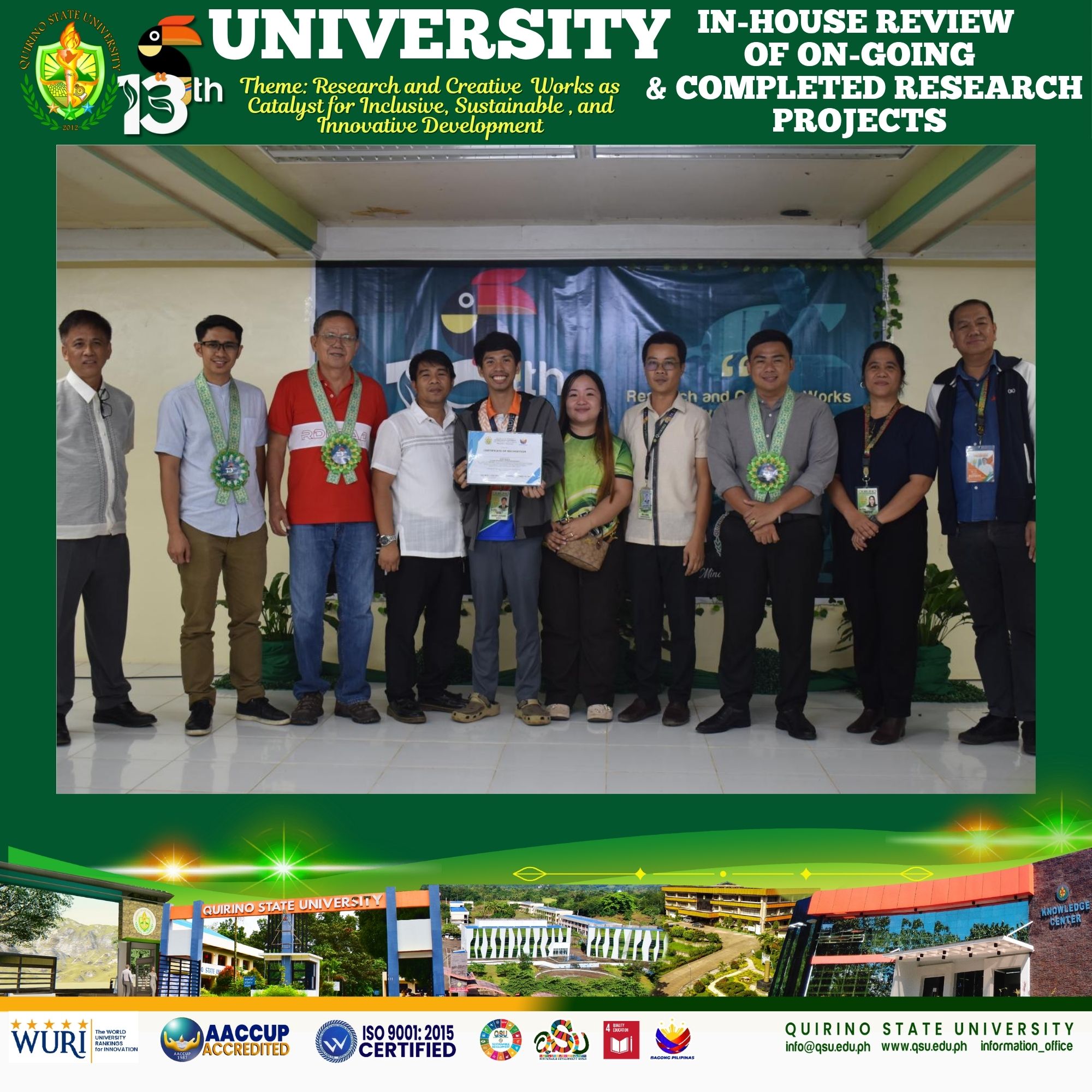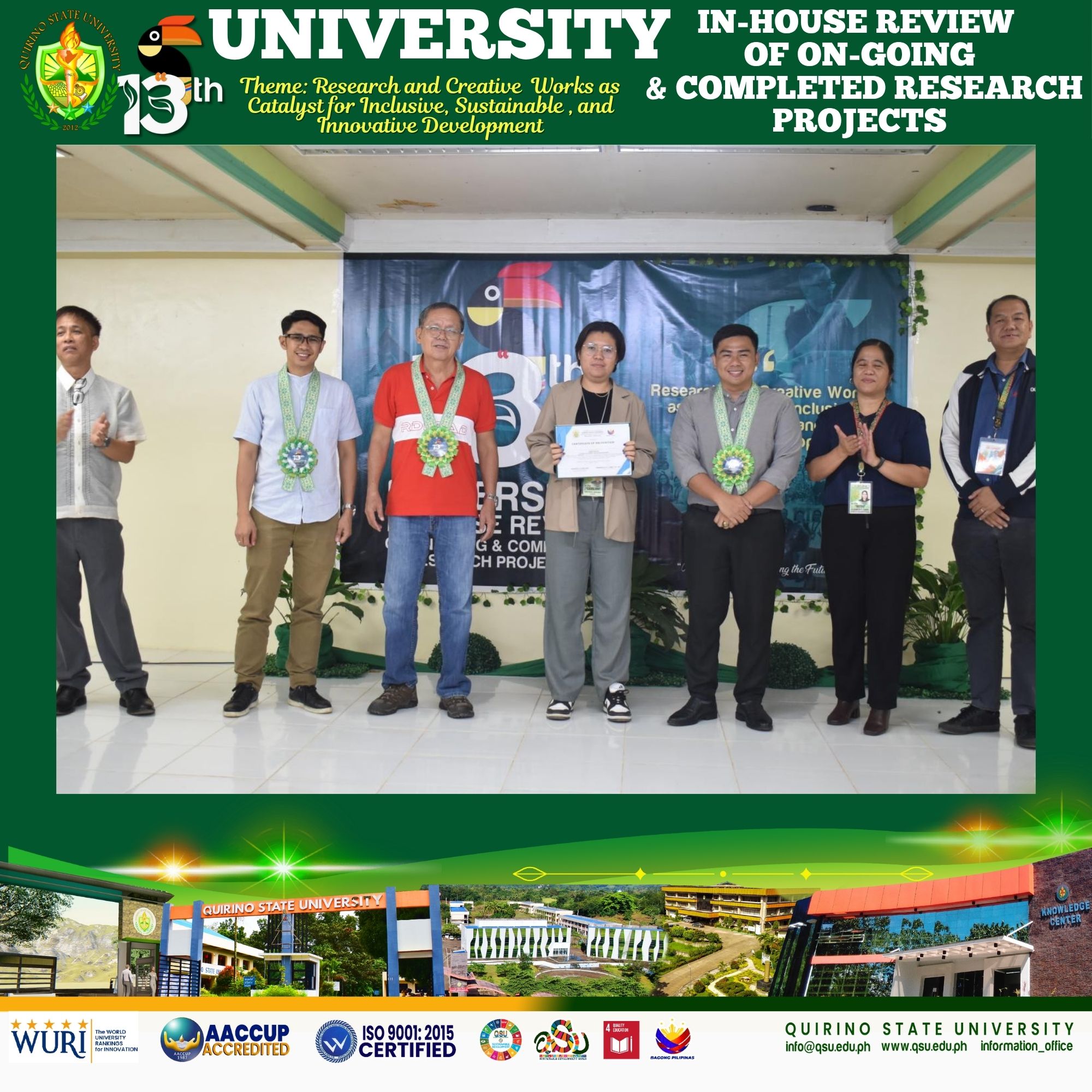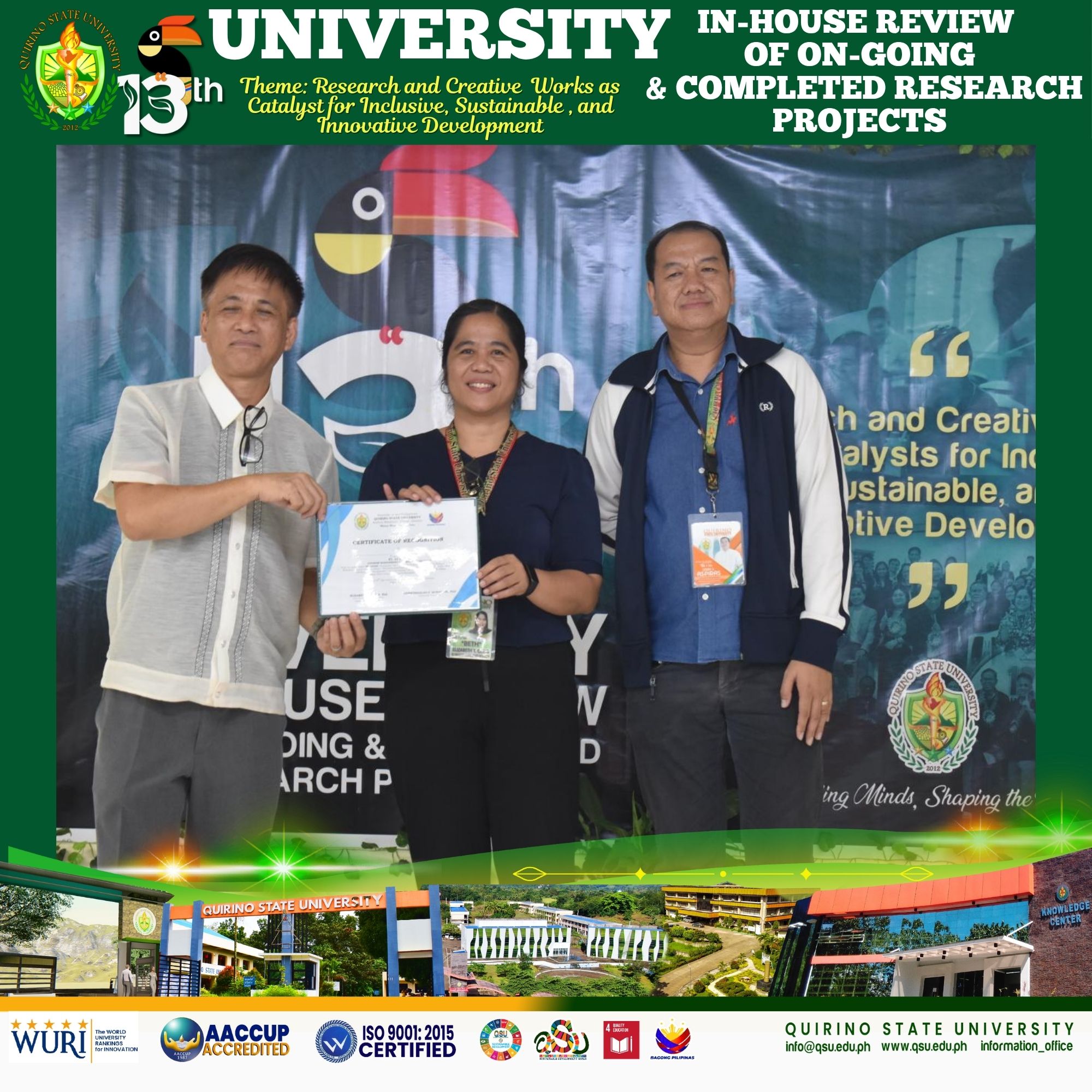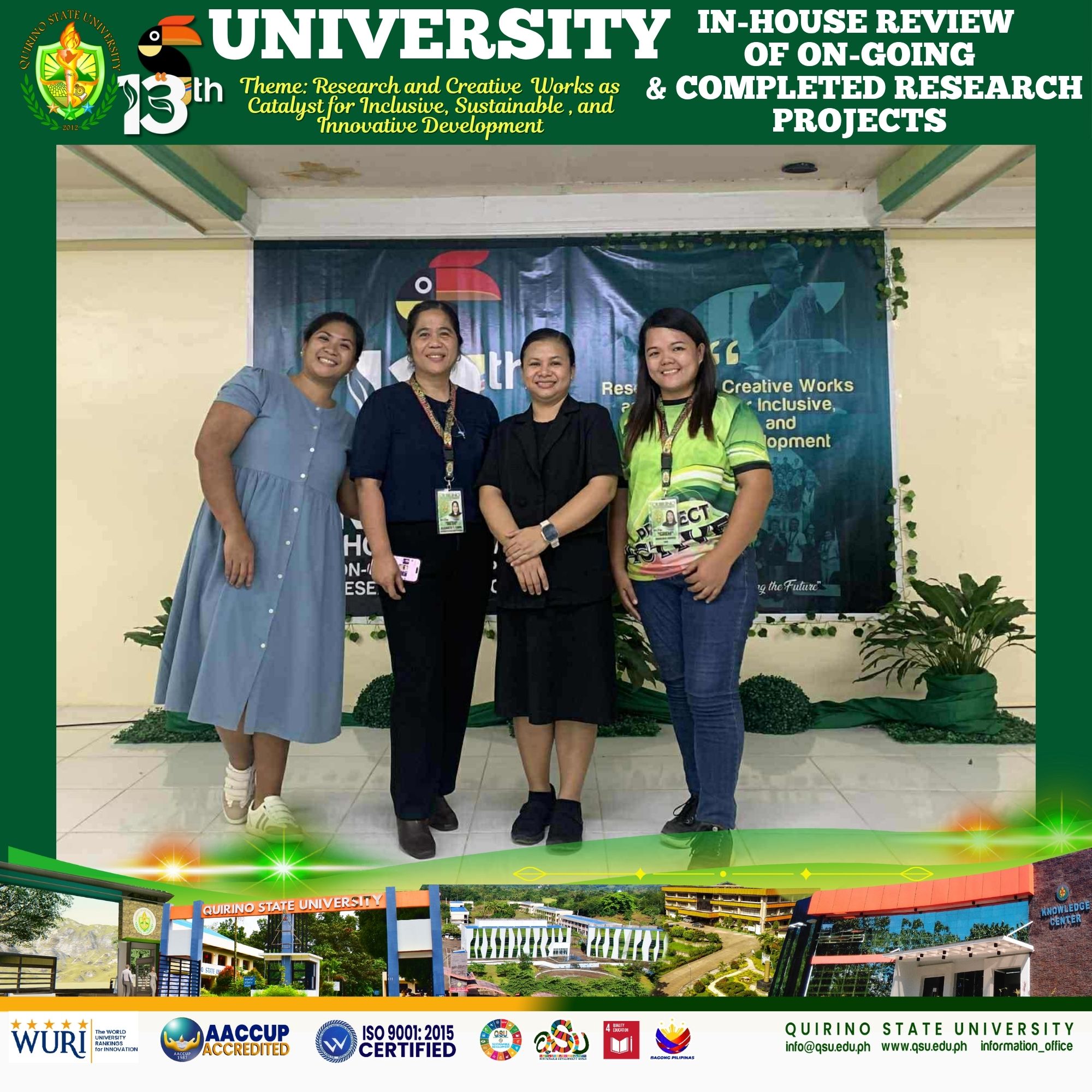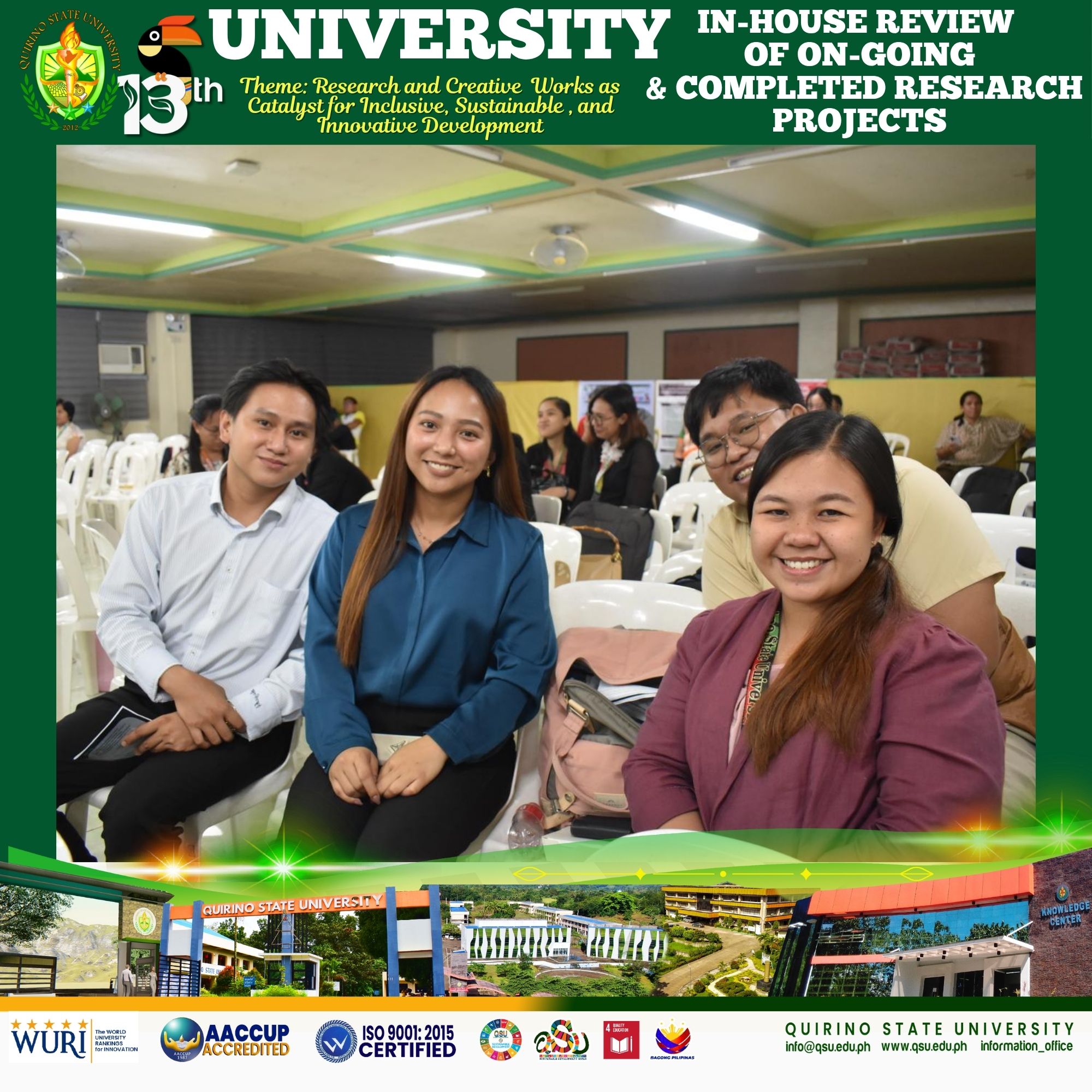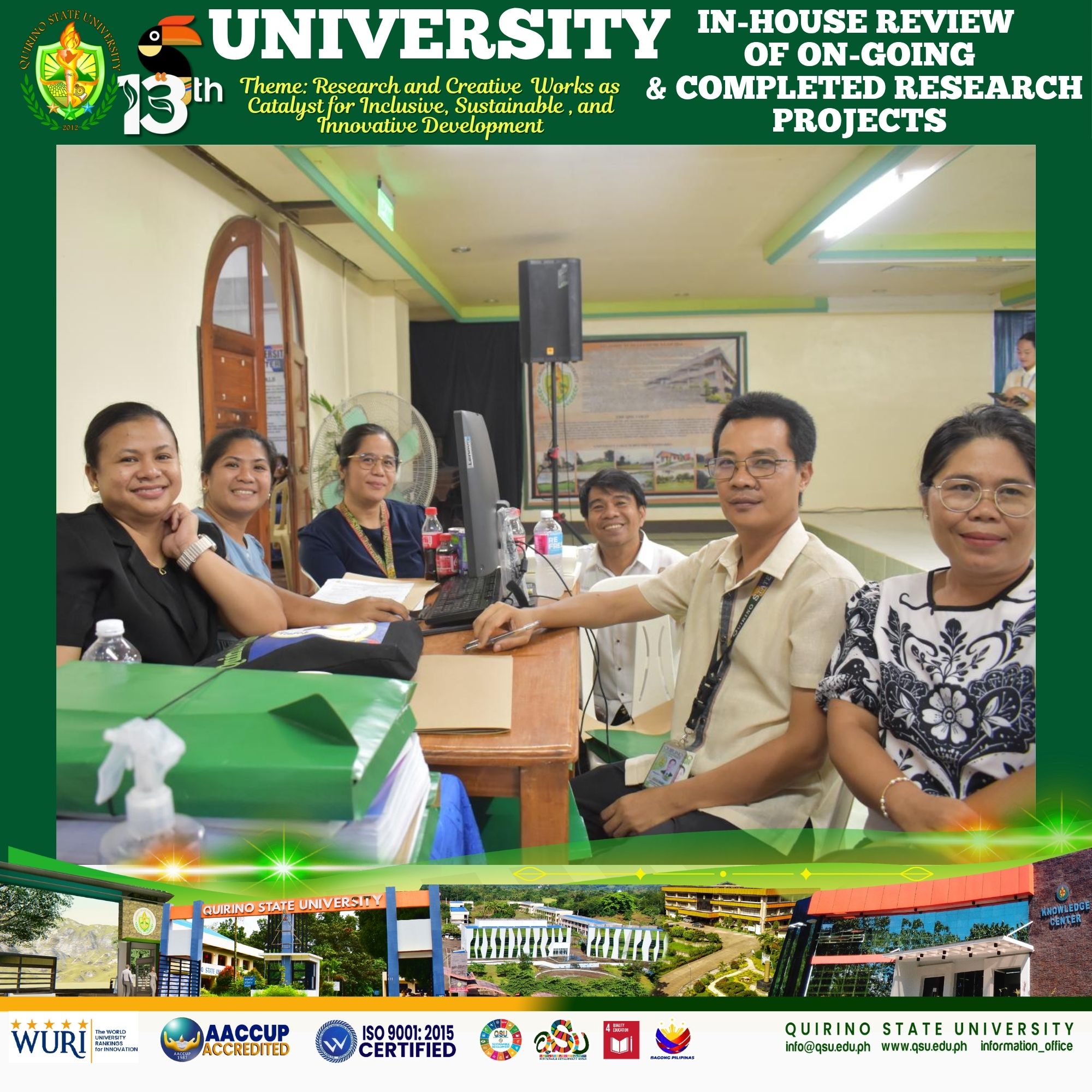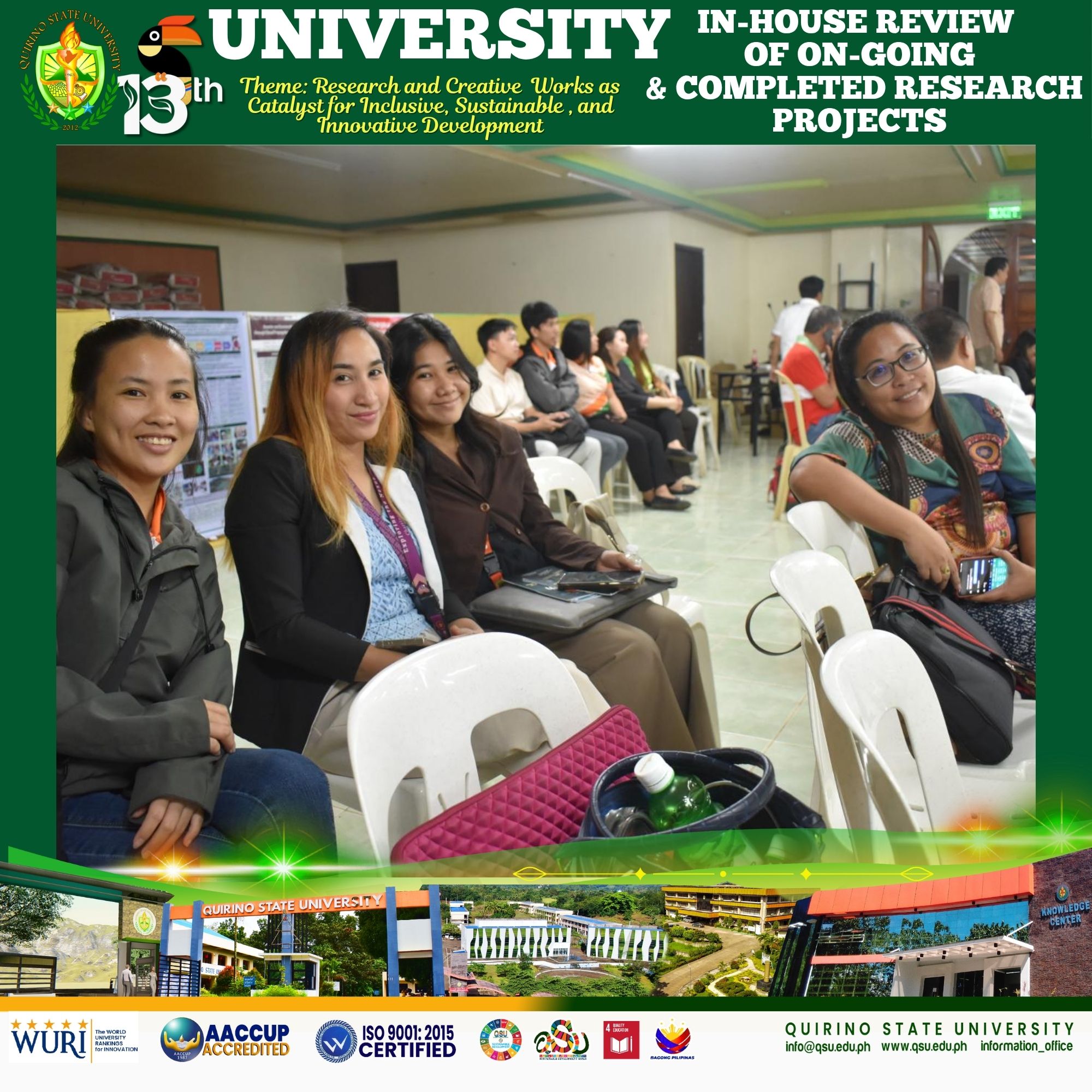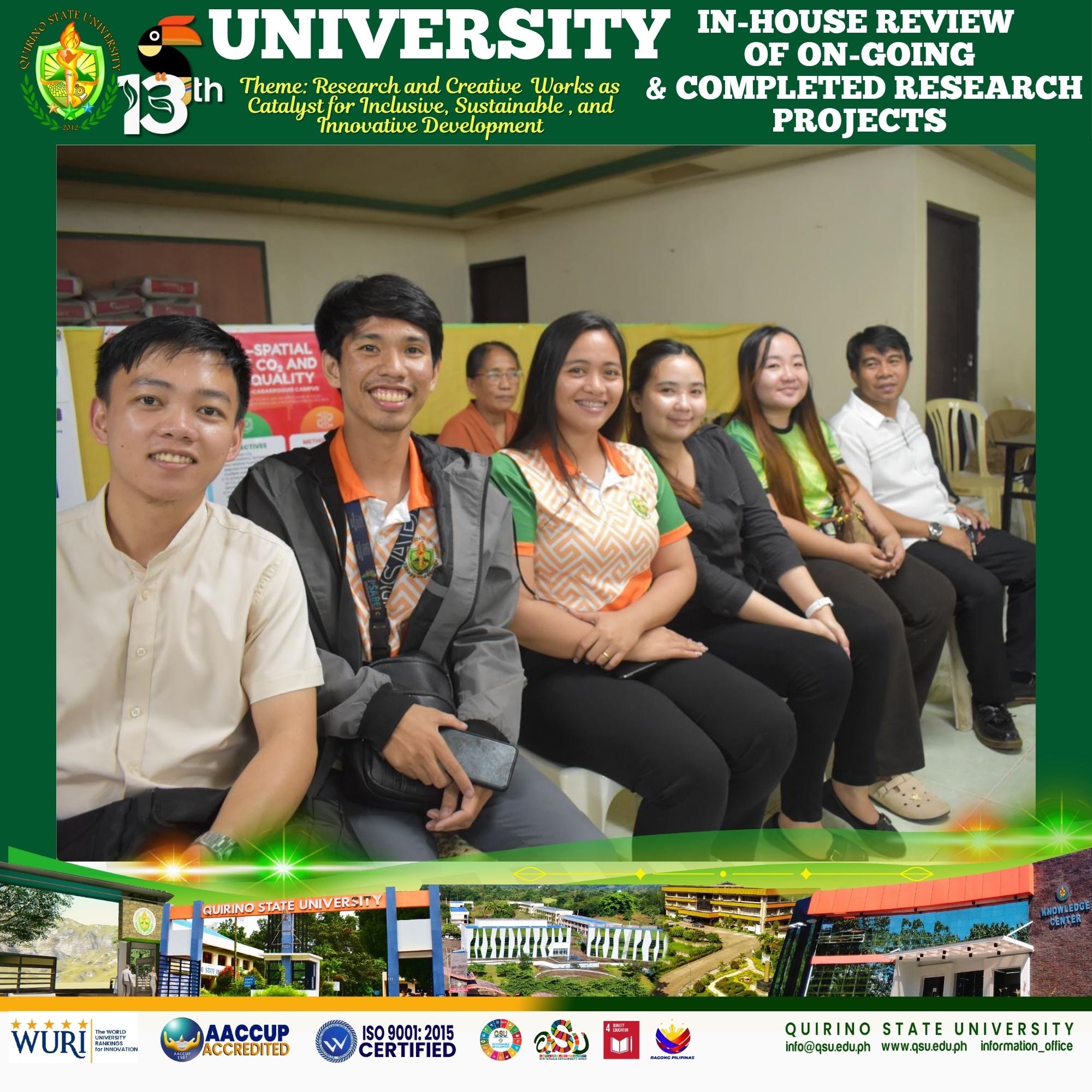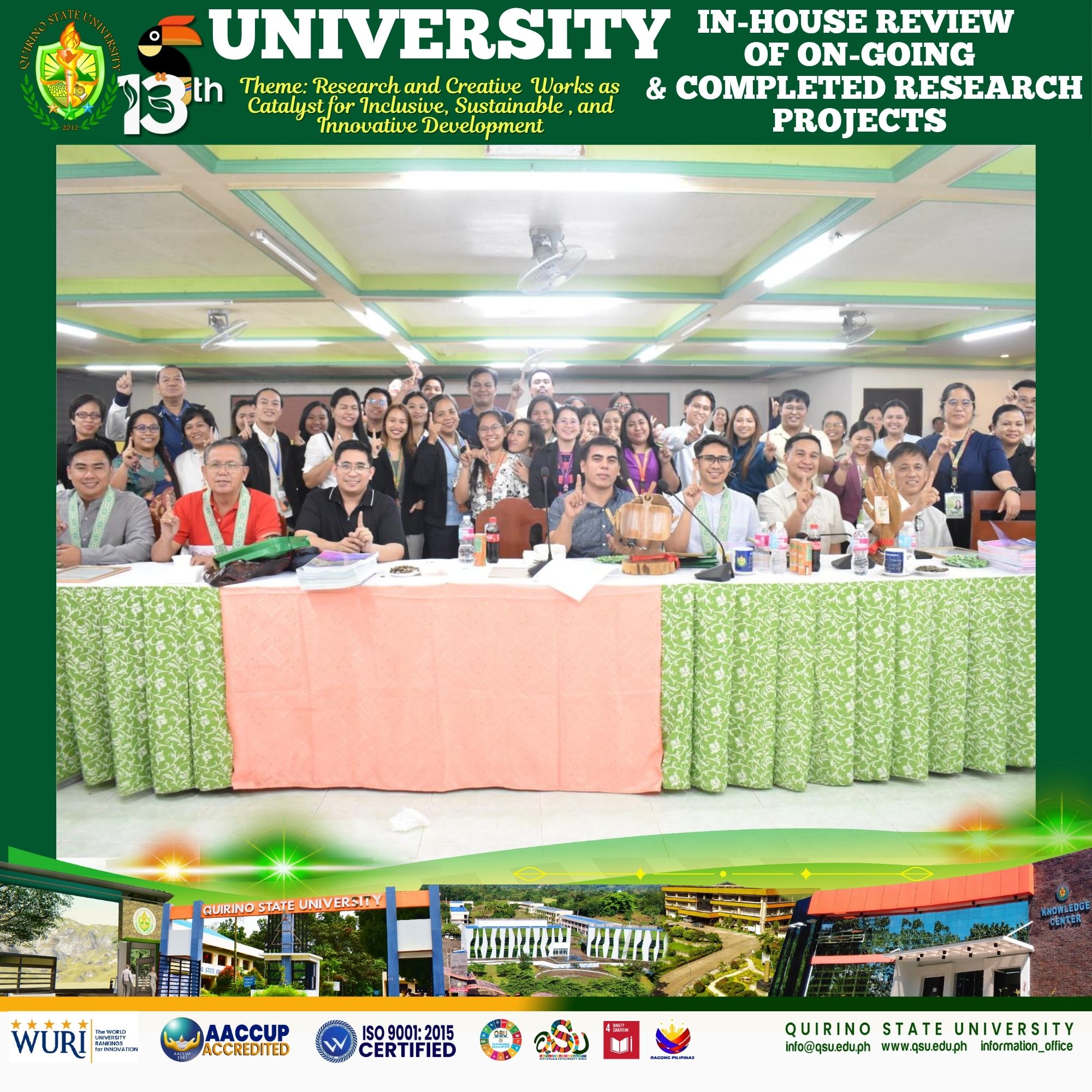



The 13th University In-house Review showcased ongoing and completed research projects yesterday, October 14, 2025, at the LRC,JAA Building, Diffun Campus. The activity was held with the theme “Research and Creative Works as Catalysts for Inclusive, Sustainable, and Innovative Development.”
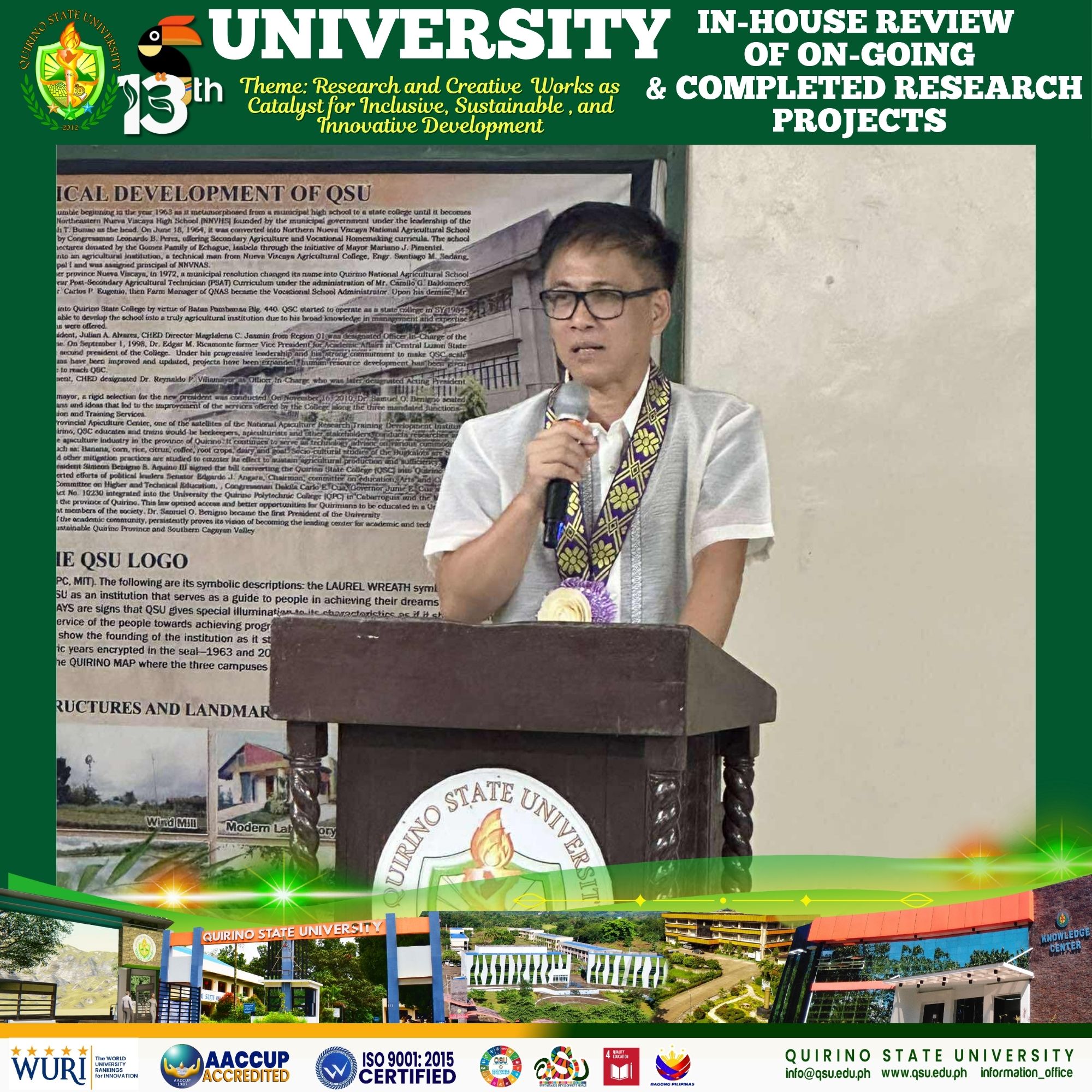
In his welcome and opening remarks, Dr. Hermenegildo F. Samoy, Jr., University President, emphasized that research and innovation represent the collective knowledge that transform lives, communities, and futures. With thought-provoking questions, he urged the participants to make the review be a case of reflection, collaboration, and inspiration, thereby igniting partnerships, refining methodologies, and grounding collective work with unified purpose as scholars and change-makers.
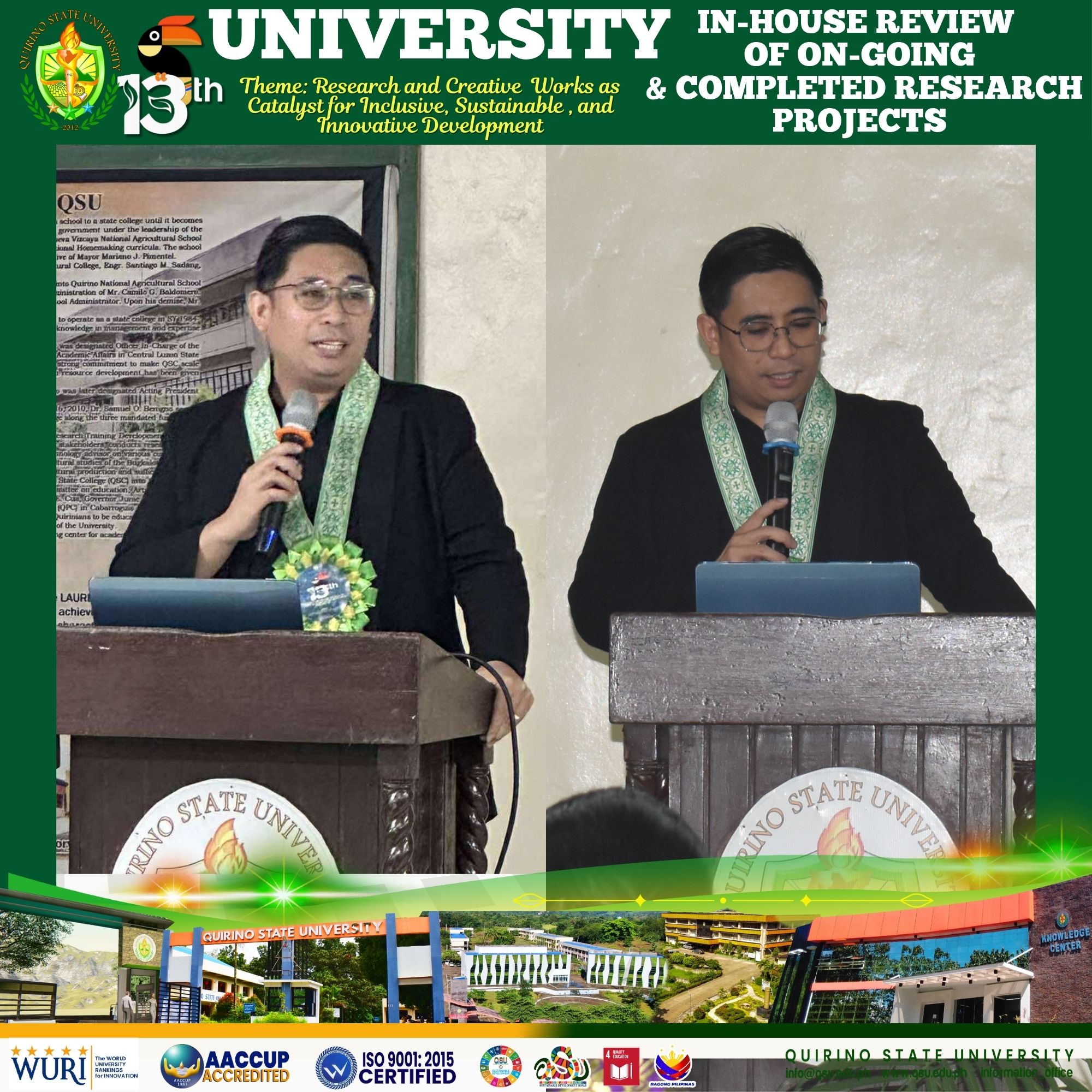
Following President Samoy’s message, Dr. Lauro S. Aspiras, the University Research and Development Director, introduced the plenary speaker, Dr. Ferdinand Bulusan of ISU-Echague Campus, University Extension and Training Services.
Dr. Bulusan shared insights on fueling QSU’s journey toward inclusive, sustainable, and innovative futures. He encouraged attendees to think creatively about solutions that assist policymakers and communities in addressing timely challenges. He closed with a powerful note: “Let the impact of our work be measured not by the thickness of our publications, but by the depth of our footprint in the communities we serve.”
Moreover, Ms. Carmela G. Blando, the Campus Director of Research and Development for Maddela Campus, introduced the panel of reviewers and evaluators.
Dr. Dyanika P. Nolasco, the Campus Director of Research and Development for Diffun Campus, presented and read the mechanics of the review. The program proceeded with the presentation of research papers at different conference rooms as scheduled.
The event concluded with words of challenge from Dr. Elizabeth T. Carig, Vice President for Academics, Research, and Extension. Aligning with Dr. Bulusan’s sentiments, she stressed that the resulting work should be immediately utilized for community improvement and development. She added that the academic outputs must transcend peer review to directly address and positively influence the lives of the people they serve.
The event became a venue for the University community to advance research for the benefit of the society. Through reflection, collaboration, and principled action, attendees were encouraged to continue refining methodologies and expanding partnerships to transform ideas into measurable, positive impact.
|𝐐𝐈𝐎